
REVIEW · DA NANG COOKING CLASSES
Vietnamese cooking class and coffee making with local girl
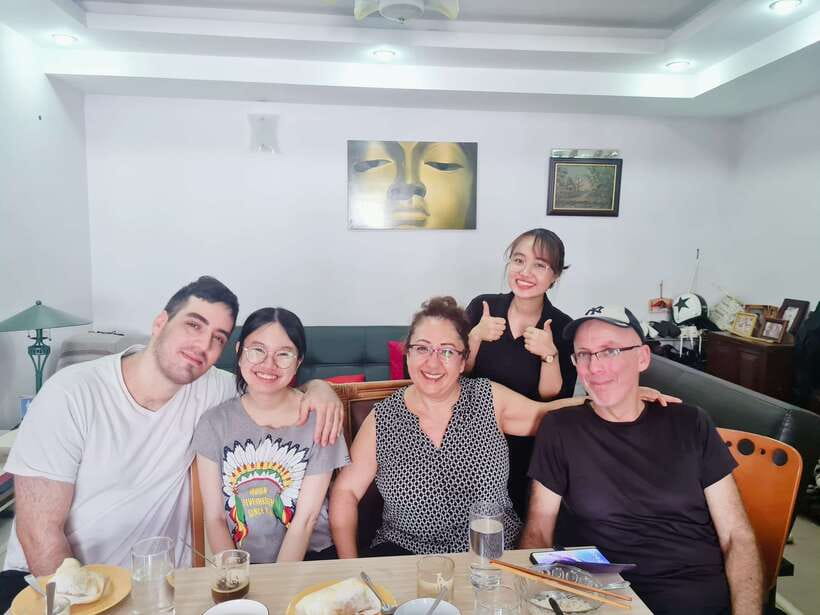
Cooking beats eating when it is hands-on. This Vietnamese cooking class in Da Nang runs in Rosie’s home kitchen and pairs real, step-by-step cooking with traditional Vietnamese coffee. It’s set up as a small-group experience limited to 6 people, so you’re not stuck watching from the edge of a busy dining room.
I like that you learn two iconic Vietnamese dishes, not just one. You’ll work with fresh local ingredients while Rosie guides you through the steps, then you sit down together and eat what you made.
One consideration: the class focuses on a couple of dish categories, so you may not end up making every item you see on a typical menu. You’ll usually choose between the noodle/pancake option (phở or bánh xèo or Quang noodles) and the spring-roll option (fried or fresh).
In This Review
- Key Highlights Worth Booking
- Rosie’s Home Kitchen in Da Nang: Why This Feels Local
- Picking Your Main Dish: Phở vs Bánh Xèo vs Quang Noodles
- Spring Rolls: Fried Crunch or Fresh Rolls You Can Roll Again
- Vietnamese Coffee Making: More Than Just a Drink
- How the 2.5 Hours Actually Work (And Why It’s Not Rushed)
- Fresh Ingredients and Flavor Building You Can Taste Immediately
- Vegan, Vegetarian, Allergy Needs, and Gluten-Free Adjustments
- Cost and Value: Is $40 Worth It?
- Who This Class Suits Best (And Who Might Skip It)
- Quick Tips Before You Go
- Should You Book This Vietnamese Cooking and Coffee Class in Da Nang?
- FAQ
- What is included in the cooking class meal?
- How long does the class last?
- What is the group size?
- Is the class taught in English?
- Is there a vegan or vegetarian option?
- Can you accommodate allergies or food restrictions?
- What is the cancellation policy?
Key Highlights Worth Booking
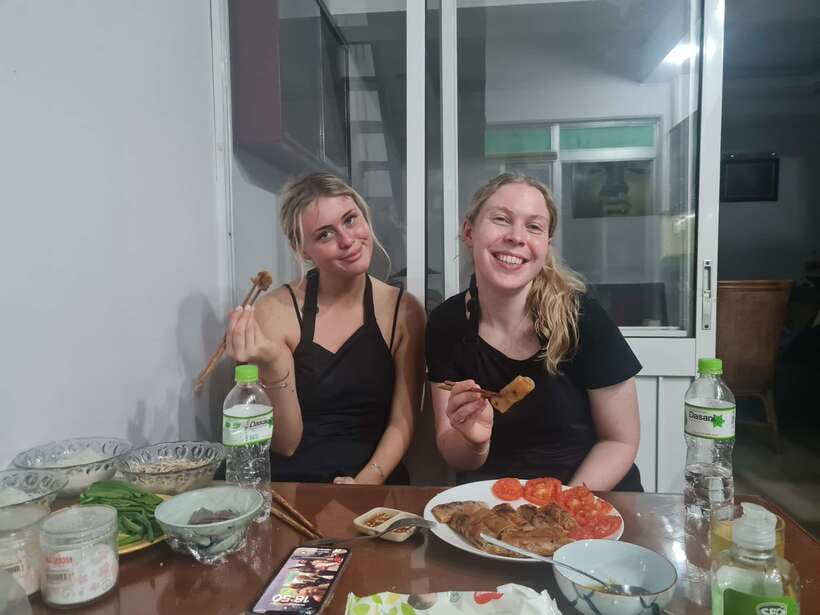
- Small group, big attention: Limited to 6 participants, with clear English guidance.
- Hands-on Vietnamese food skills: Learn the steps for a noodle/pancake dish plus spring rolls.
- Traditional coffee making included: You’ll make Vietnamese coffee as part of the experience.
- Choose your spring-roll style: Fried spring rolls or fresh spring rolls, depending on what you select.
- Dietary needs can be handled: Vegan/vegetarian option is available, and requests like gluten-free may be accommodated.
Roll up your sleeves at another Da Nang cooking class
- 5 Dishes Cooking Class with Market Trip in Da Nang★ 5.0 · 466 reviews
- Da Nang Authentic Home Cooking Class★ 5.0 · 354 reviews
- 5 traditional dishes Da Nang cooking class with market trip★ 5.0 · 331 reviews
- Hoi An: Lantern Making, Basket Boat, and Cooking Class★ 4.9 · 233 reviews
Rosie’s Home Kitchen in Da Nang: Why This Feels Local
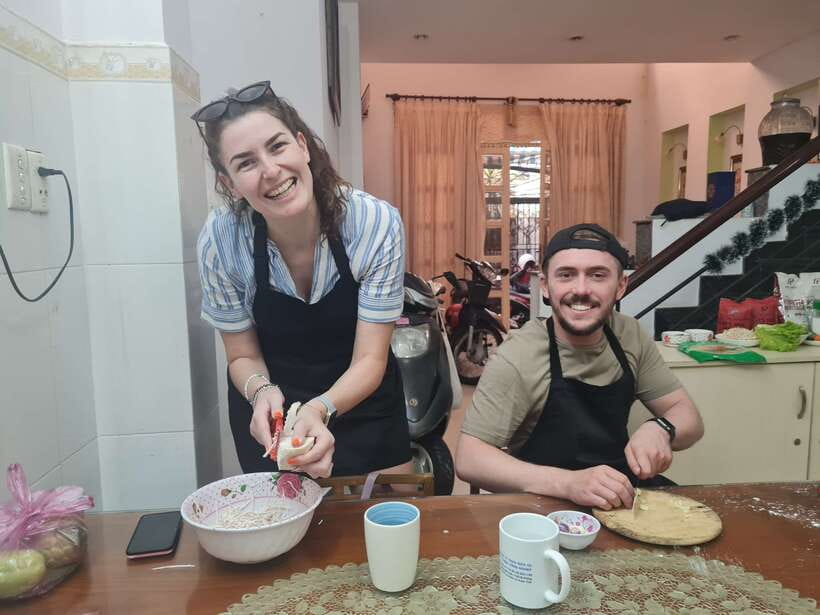
In Da Nang, it’s easy to find a cooking class that feels like a performance. This one doesn’t. It happens in Rosie’s own kitchen, with a cozy setup that makes the whole experience feel human-scale and relaxed.
The small group size matters more than people think. With only up to 6 participants, Rosie can actually see what your hands are doing, correct small technique issues, and keep the pace comfortable. That’s a big deal when you’re learning tasks like portioning ingredients, timing the cooking steps, or getting spring rolls tight enough to hold together.
I also like that you’re not doing this solo. You’ll cook, then you’ll eat together in the same space. That turns the class into something more than a checklist. You get to taste the results right away, compare notes with your group, and ask follow-up questions while the food is still warm.
Picking Your Main Dish: Phở vs Bánh Xèo vs Quang Noodles
The menu is built around one key choice: phở / bánh xèo / Quang noodles. The idea is simple. You learn one iconic noodle-style dish or one iconic pancake-style dish—depending on what you choose and what’s available at your time slot.
Here’s how this helps you as a cook (even if you’re a beginner). Vietnamese cooking is all about balance: herbs vs. broth, crispness vs. tenderness, and flavor layers built step-by-step. When you focus on one main option, you can actually learn the logic behind it instead of juggling five recipes at once.
What you can expect, in practical terms:
- You’ll follow guided steps using fresh local ingredients, not shelf-stable shortcuts.
- You’ll spend time on the key skill of that dish category (broth-building for phở, batter + crisp edges for bánh xèo, or the distinctive noodle approach for Quang noodles).
- You’ll likely learn how to assemble and serve so the finished dish looks and tastes right, not just how to cook components.
If you’re the type who loves variety, this choice can be a little frustrating. The upside is that you’ll leave with at least one dish you can recreate, because you’ll have practiced it instead of sampling it.
Spring Rolls: Fried Crunch or Fresh Rolls You Can Roll Again
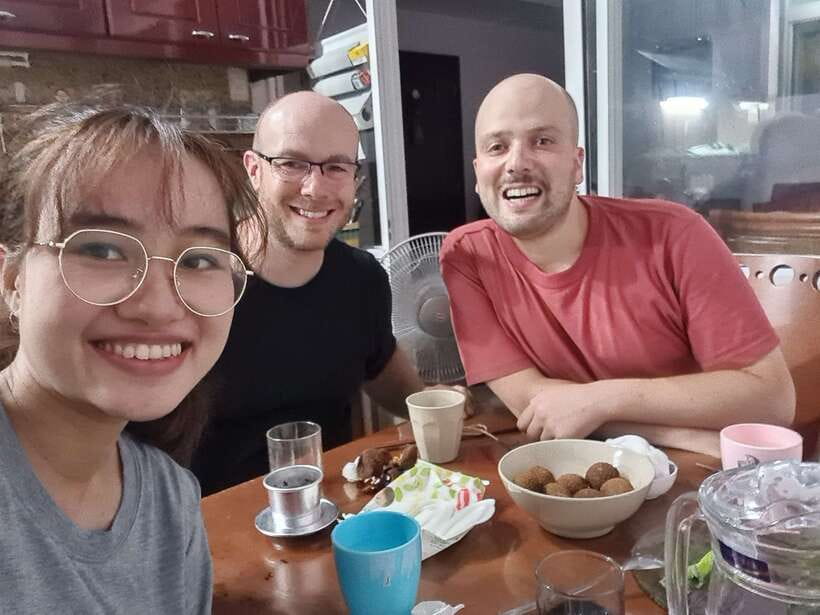
Your second focus is fried spring rolls / fresh spring rolls. Again, the class is set up around learning one style deeply. That’s smart, because these two styles demand different technique.
Fried spring rolls tend to teach you about:
- how to wrap tightly so the roll stays intact during frying
- how to manage the cooking so you get crisp outside without burning
- how to pair the roll with whatever dipping flavors are part of the meal
Fresh spring rolls teach you about:
- rolling technique that keeps wrappers from tearing
- building a good vegetable and filling balance
- keeping things fresh and not soggy, which is all about assembly and timing
Either way, you’ll end up with food to eat that night, not just theoretical lessons. And because this is a home-style class, you can ask practical questions while your hands are still at the worktable. That’s where the learning sticks.
Vietnamese Coffee Making: More Than Just a Drink
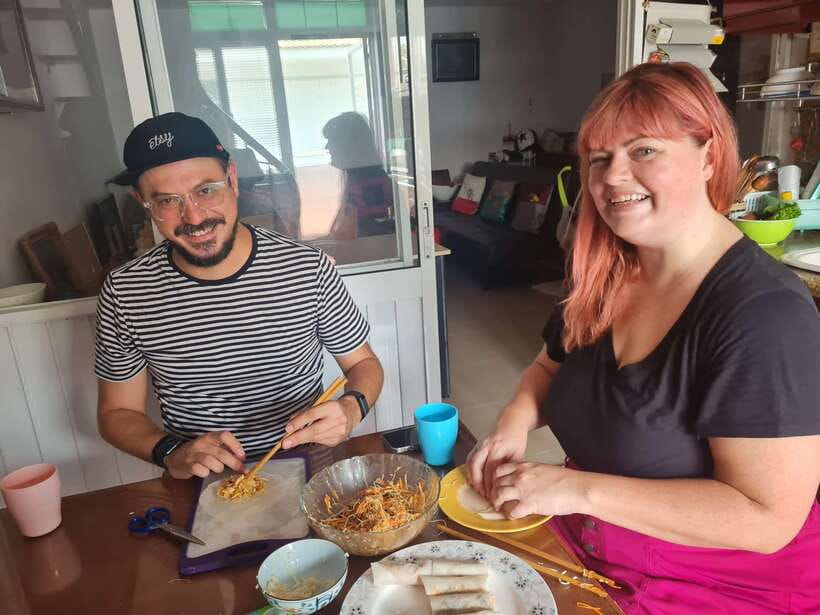
The class doesn’t stop at food. You also learn Vietnamese coffee making in the traditional style. This is a classic Vietnamese ritual, and it’s not just about taste—it’s about method and pacing.
What this usually means in a good class: you learn the steps, you see the coffee process in action, and you get a feel for why Vietnamese coffee tastes the way it does. Even if you’ve had it in cafes before, making it with guidance is a different experience. You start noticing details like the grind-to-brewing relationship and how the drink is served.
The experience also offers juice options. If you’d rather not do coffee, you can have passion fruit juice, or you can request another type of drink if it’s possible. That makes the class feel flexible without changing what you came for: a hands-on Vietnamese culinary experience.
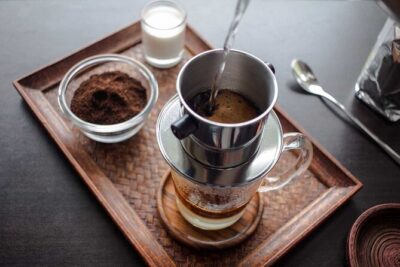
More Vietnamese coffee to sit down with
How the 2.5 Hours Actually Work (And Why It’s Not Rushed)
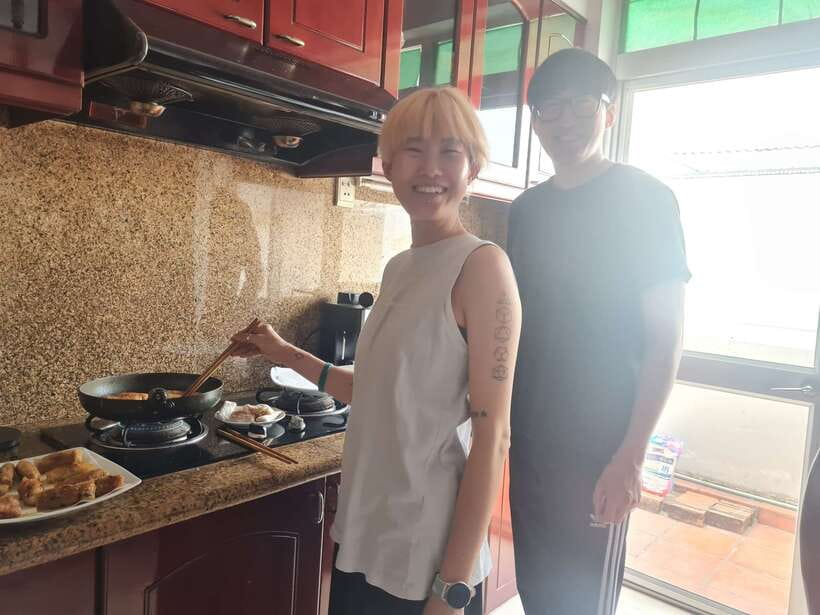
This is a 2.5-hour class, and that timing matters. Cooking needs enough time to do three things: set up, cook, and then eat without everything turning into a sprint.
In a well-run small-group class, you should expect:
- a welcome and overview of what you’ll be making
- guided cooking at each step, so you’re not guessing
- time to finish, then sit down and enjoy the meal together
From the way the class is described, Rosie’s teaching style is very hands-on and structured. English is used throughout, and the experience is explicitly welcoming for all skill levels. That’s reassuring if you’re not confident in the kitchen. Cooking classes often fall apart when beginners feel embarrassed. This one is built to keep you moving forward.
One extra benefit of the cozy home setting: you can ask questions without feeling like you’re slowing down a formal group tour. When something isn’t clear, you can get a quick explanation and keep going.
Fresh Ingredients and Flavor Building You Can Taste Immediately
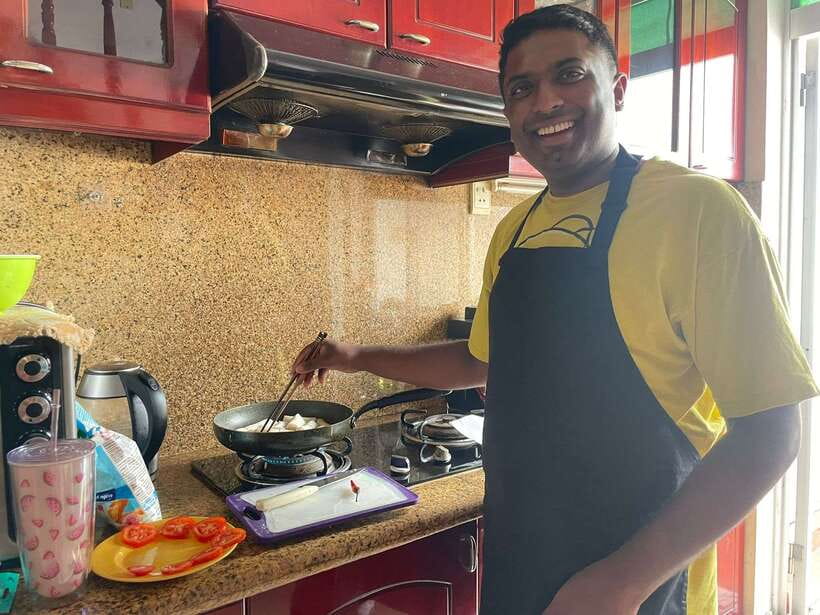
A big part of why Vietnamese food hits is freshness and balance. This class leans into that by guiding you through cooking with fresh local ingredients. It’s not just a sales line. When ingredients are fresh, the flavors come through more clearly, and it’s easier to understand what each ingredient is doing.
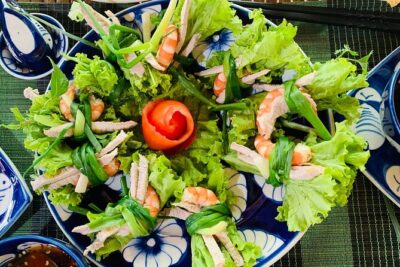
A practical example: spring rolls are a great test of technique because the filling-to-wrapper ratio and the freshness of the herbs are noticeable right away. Same with noodle/pancake dishes. You’ll taste the difference between bland, overcooked, and properly seasoned components.
And since you eat the meal you make in the same session, you get immediate feedback. That’s one of the best learning tools around. You don’t have to imagine what your final dish should taste like. You taste it, then you learn why it works.
Vegan, Vegetarian, Allergy Needs, and Gluten-Free Adjustments
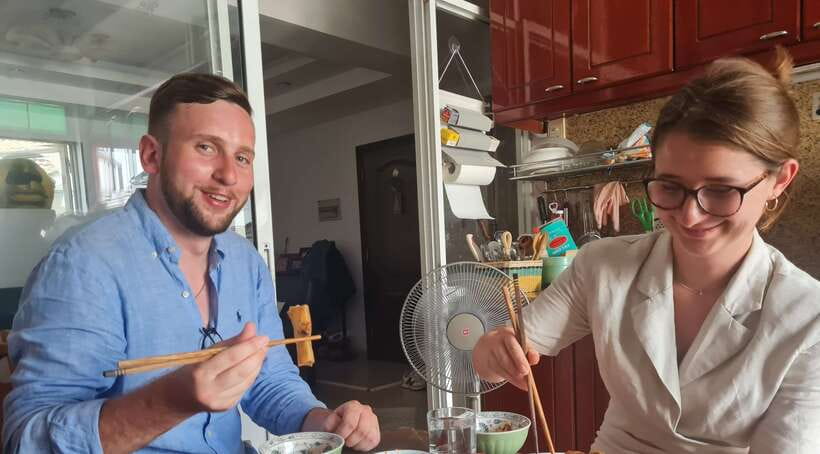
If you eat a restricted diet, you want two things from a class: clarity and care. This one states that a vegan/vegetarian option is available, and you’re asked to tell the host about any food restrictions or allergies.
I also appreciate that the experience doesn’t pretend everything is one-size-fits-all. It specifically invites you to share restrictions ahead of time, and the class is described as adjustable when possible.
One detail worth noting: in a small-group class like this, you may be able to get creative adaptations. For example, one participant reported that Rosie made the recipes gluten free for their needs. That’s not a guarantee for every request, but it’s a strong sign that the host is paying attention to real dietary situations, not just checking a box.
If you have allergies, I’d treat this as a “message first” class. Share your needs clearly when you book, and be direct about what you can and can’t eat.
Cost and Value: Is $40 Worth It?
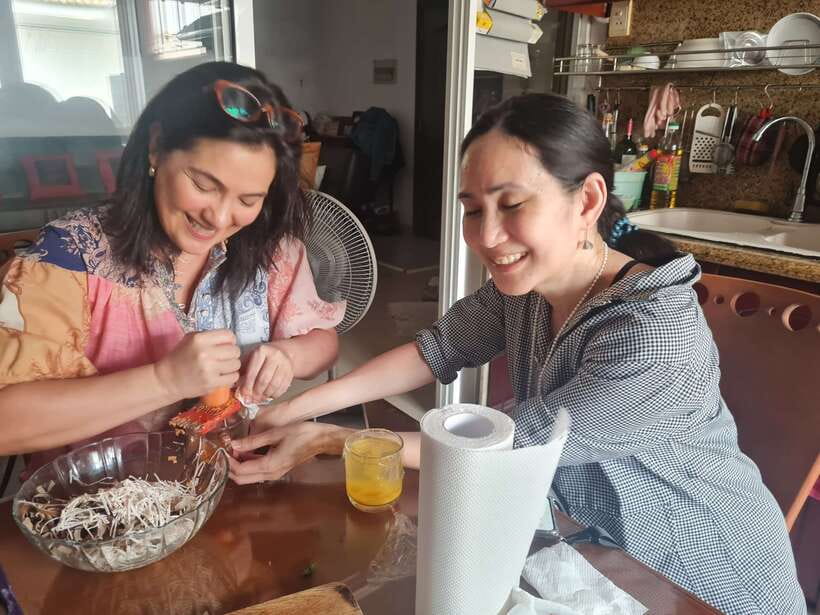
At $40 per person for a 2.5-hour small-group cooking class, this sits in the value zone for a hands-on food experience. What makes it good value isn’t just the price tag. It’s what you’re getting: guided cooking, the meal you prepare, and Vietnamese coffee making.
Let’s break down what $40 buys you in real terms:
- You learn technique you can repeat at home (not just taste a dish).
- You work with fresh ingredients and get coaching through steps.
- You eat the meal together, so the class includes closure, not just instruction.
- You get an included drink component via Vietnamese coffee (or juice options).
The small group limit to 6 helps justify the price too. If you were in a huge group, the teacher would have less time for each person. Here, the structure suggests more attention per participant.
If you’re comparing costs, I’d compare against other “cook then eat” options in Da Nang—not against snack tastings or short street-food walks. This is a real cooking session.
Who This Class Suits Best (And Who Might Skip It)
This is a strong fit if you:
- want a hands-on Vietnamese cooking class rather than a restaurant tour
- enjoy learning one or two dishes well, and then eating your results
- like the idea of making Vietnamese coffee in a guided setting
- prefer small-group experiences where you can ask questions
It may not be the best choice if you:
- want a full day of sightseeing and history with lots of walking
- hate the idea of doing practical tasks in the kitchen (wrapping, timing, cooking)
- expect to make every single famous Vietnamese dish in one session
For most food-minded travelers, though, it’s a great middle ground: you learn skills, you get local ingredients, and you leave with a meal in your body and a recipe memory in your head.
Quick Tips Before You Go
You’ll get more out of the class if you show up ready to cook. That sounds obvious, but in practice it helps:
- Wear comfortable clothes you don’t mind getting splashed with a bit of kitchen life.
- Come hungry in the best way. You’re going to eat what you make.
- If you have dietary needs, message ahead and be specific.
- Choose your main dish and spring-roll style based on what you’re most curious about. Don’t overthink it. The point is learning one style deeply.
Also, plan your time around the start of your session. The class notes say starting times vary by availability, so check what works with your Da Nang schedule.
Should You Book This Vietnamese Cooking and Coffee Class in Da Nang?
I’d book it if you want a real, guided kitchen experience with a local host in Da Nang. Rosie’s class is built around clear instruction, fresh ingredients, and learning two dish categories plus traditional Vietnamese coffee making. The small group size is a real quality signal, and the fact that vegan/vegetarian options exist—and that adaptations like gluten-free have been reported—makes it easier to feel comfortable.
Skip it only if you want a passive food experience or if you’re looking for a multi-stop sightseeing day. This is about cooking, eating, and learning technique.
If you like food that tastes like Vietnam and you’d rather learn than just observe, this is the kind of activity you’ll remember long after you leave the kitchen.
FAQ
What is included in the cooking class meal?
You’ll learn to cook a main dish (phở or bánh xèo or Quang noodles) and then make spring rolls (fried or fresh). The meal includes Vietnamese coffee, passion fruit juice, or another drink if possible.
How long does the class last?
The class lasts 2.5 hours.
What is the group size?
It’s a small group limited to 6 participants.
Is the class taught in English?
Yes. The host or greeter speaks English.
Is there a vegan or vegetarian option?
Yes. A vegan/vegetarian option is available.
Can you accommodate allergies or food restrictions?
You should let the host know about any food restrictions or allergies, and adjustments may be possible.
What is the cancellation policy?
Free cancellation is available up to 24 hours in advance for a full refund.
More Tour Reviews in Da Nang
- Da Nang: Lady Buddha, Marble Mountains, and Am Phu Cave Tour
★ 4.7 · 3,373 reviews - Full Day Golden Bridge and Ba Na Hills Small Group Tour
★ 5.0 · 2,369 reviews - From Da Nang/Hoi An: Golden Bridge Ba Na Hills Full-Day Tour
★ 4.7 · 1,737 reviews - Da Nang: Han River Local Cruise by Night
★ 4.1 · 1,152 reviews - Da Nang: Golden Bridge, Lady Buddha, Marble Mt & Am Phu Cave
★ 5.0 · 1,147 reviews - Morning Small group to Marble Mountains – Am Phu Cave – Monkey Mountain
★ 5.0 · 1,097 reviews
The Da Nang Coffee Table
- Da Nang Coffee Making Workshop
★ 4.9 · 543 reviews - Da Nang Cooking Class with Coffee Tasting and Market Visit
★ 5.0 · 310 reviews - DaNang Farm-to-Table Cooking Class with Market and Coffee Tasting
★ 5.0 · 131 reviews - Da Nang Coffee Making Workshop
★ 5.0 · 26 reviews - Coffee Making and Cooking Class
★ 5.0 · 12 reviews - Da Nang Vegetarian Cooking and coffee Class
★ 4.6 · 11 reviews
Aprons On in Da Nang
- 5 Dishes Cooking Class with Market Trip in Da Nang
★ 5.0 · 466 reviews - Da Nang Authentic Home Cooking Class
★ 5.0 · 354 reviews - 5 traditional dishes Da Nang cooking class with market trip
★ 5.0 · 331 reviews - Da Nang Cooking Class with Coffee Tasting and Market Visit
★ 5.0 · 310 reviews - Hoi An: Lantern Making, Basket Boat, and Cooking Class
★ 4.9 · 233 reviews - RICE PAPER Noodle Making Experience & Hoi An Cooking Class Class
★ 5.0 · 164 reviews
Just Added: The Newest Da Nang Reviews




Da Nang Cooking Classes, side by side.
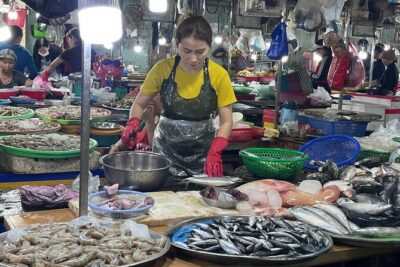 ★ 5.05 Dishes Cooking Class with Market Trip in Da NangFrom $39466 reviews
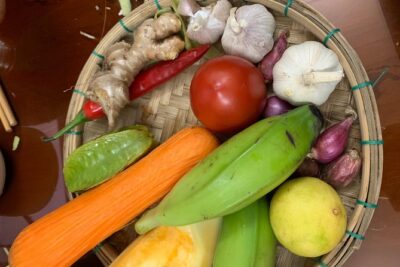 ★ 5.0Da Nang Authentic Home Cooking ClassFrom $36354 reviews
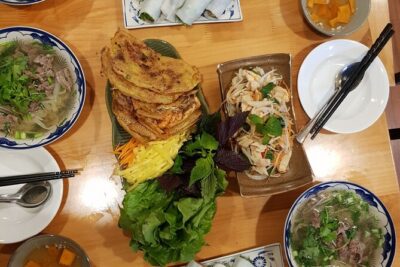 ★ 5.05 traditional dishes Da Nang cooking class with market tripFrom $39331 reviews
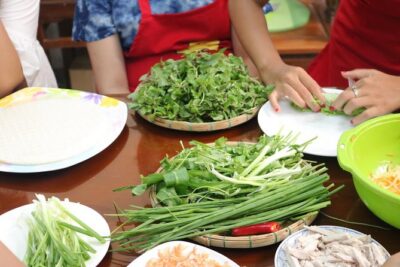 ★ 5.0Da Nang Cooking Class with Coffee Tasting and Market VisitFrom $45310 reviews
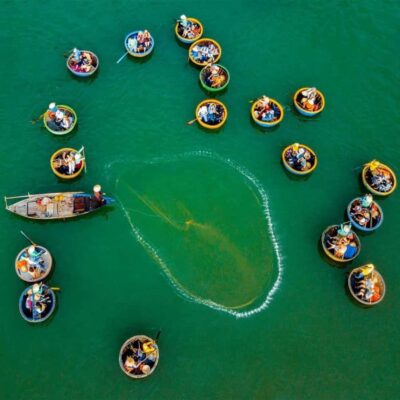 ★ 4.9Hoi An: Lantern Making, Basket Boat, and Cooking ClassFrom $15233 reviews
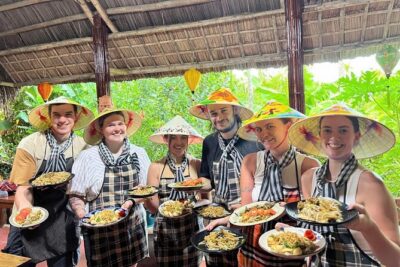 ★ 5.0RICE PAPER Noodle Making Experience & Hoi An Cooking Class ClassFrom $33164 reviews
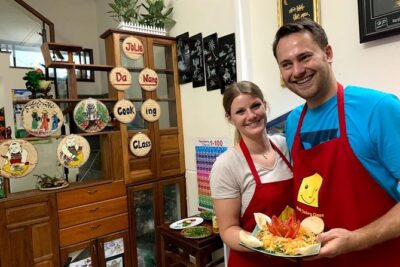 ★ 5.0DaNang Farm-to-Table Cooking Class with Market and Coffee TastingFrom $60131 reviews
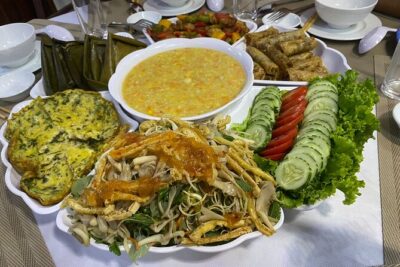 ★ 5.0My Son Sanctuary Guided Tour with Rice Paper Making from Da NangFrom $27115 reviews
Lists featuring this tour