
REVIEW · DA NANG COOKING CLASSES
5 Dishes Cooking Class with Market Trip in Da Nang
Market to meal in four hours.
This cooking class turns Da Nang ingredients into a hands-on plan: a market trip first, then you cook five famous dishes and eat what you make. I like the built-in market shopping, because it helps you understand what each dish needs and what you can swap when you’re back home. I also like that you leave with a cookbook and certificate, not just a plate full of food. One thing to consider: timing and language can vary a bit depending on the class before yours, and English comfort isn’t always identical across instructors.
You’ll meet at 07 Nguyễn Bá Lân, Bắc Mỹ An (Ngũ Hành Sơn), Đà Nẵng, about 15 minutes before the start. The group stays reasonable (max 30), the ticket is mobile, and the whole experience runs about four hours, ending back at the meeting point.
In This Review
- Key Highlights I’d Plan Around
- Why This Class Starts at Chợ Bắc Mỹ An
- Getting Oriented: Meeting Point and the 4-Hour Flow
- Cooking Five Da Nang Favorites: What You’ll Make and Why It Matters
- Bánh Xèo
- Bún Bò Huế
- Hoi An Fresh Roll
- Young Jackfruit Salad
- Avocado Ice-Cream
- Your Meal Includes Rice Vodka, Plus Receipts for Cooking Later
- Vegetarian, Vegan, and Allergy Requests: A Real Check Before You Book
- Price and Value: Is $39 Worth It?
- Teacher Experience and English Levels: What to Expect
- Who This Da Nang Cooking Class Is Best For
- Should You Book 5 Dishes Cooking Class with Market Trip in Da Nang?
- FAQ
- FAQ
- Where is the meeting point for the class?
- How long does the experience last?
- What dishes will I cook?
- Do I eat the food I cook?
- Is rice vodka included?
- Is the tour good for vegetarians or people with allergies?
- How big is the group?
- Is it easy to find on the day?
- What happens after the class ends?
- Can I cancel for a full refund?
Key Highlights I’d Plan Around
- Chợ Bắc Mỹ An market shopping first, so your cooking choices make more sense
- Five dishes you actually make, not just watch from the side
- Real local add-ons, including a meal served with homemade rice vodka
- Cookbook + certificate for keeping your notes and recipes
- Vegetarian, vegan, and allergy requests can be handled with advance notice
Roll up your sleeves at another Da Nang cooking class
- 5 Dishes Cooking Class with Market Trip in Da Nang★ 5.0 · 466 reviews
- Da Nang Authentic Home Cooking Class★ 5.0 · 354 reviews
- 5 traditional dishes Da Nang cooking class with market trip★ 5.0 · 331 reviews
- Hoi An: Lantern Making, Basket Boat, and Cooking Class★ 4.9 · 233 reviews
Why This Class Starts at Chợ Bắc Mỹ An
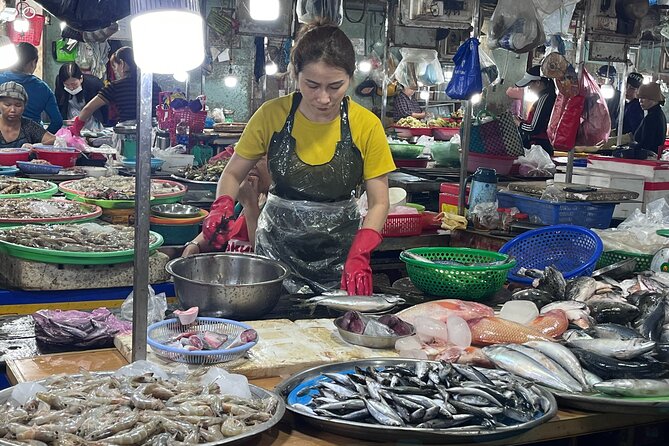
If you’ve ever tried to cook Vietnamese food at home, you’ve probably run into the same problem: you can follow a recipe, but the ingredients aren’t always the same as the ones you had in Vietnam. This class tackles that head-on by starting with a trip to Chợ Bắc Mỹ An so you can see the ingredients up close before the cutting board starts calling your name.
In the market, you’re not just shopping for the sake of shopping. You’re learning what’s common locally, what flavors matter, and which items might be hard to find later. That makes the “cook it at home” goal more realistic. The format is also simple and practical: you come in, you shop, you return, and then you cook with what you learned. It’s a smart way to turn the market from a tourist stop into a skill builder.
Another quiet benefit: the market sets your taste expectations. Vietnamese dishes often balance multiple elements at once, like fresh herbs versus noodles, or a salad’s tang against fruit sweetness. When you’ve seen the ingredients in person, the finished dishes make more sense, and you’re less likely to feel lost when you’re handed a bowl and a list of steps.
Getting Oriented: Meeting Point and the 4-Hour Flow
The schedule is straightforward, and that’s a plus when you’re on a short trip. You meet at 07 Nguyễn Bá Lân about 15 minutes before the start time. After that, the experience runs around 4 hours and ends back at the same meeting point.
A couple of details make your day easier:
- Mobile ticket means less fuss on your phone, no paper hunting.
- The meeting area is near public transportation, so you’re not stuck guessing how to get there if you’re not riding a private taxi.
- The group is capped at 30 travelers, which usually keeps the room from feeling chaotic.
One thing I’d plan for: the class you’re joining may be affected by how earlier sessions run. If you’re the type who hates waiting, build in a little patience at the start. It’s not a reason to skip the tour, but it’s worth knowing you might not be the only class in the timeline.
Cooking Five Da Nang Favorites: What You’ll Make and Why It Matters
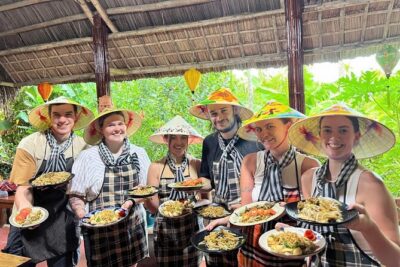
This is a hands-on cooking class focused on five specific dishes. The big win is that you’re practicing a range of techniques: frying, noodle cooking, rolling fresh food, building sweet-sour salads, and making dessert.
Here are the five dishes, and what they teach you:
Bánh Xèo
This is the famous Vietnamese savory pancake, and it’s a great dish to learn because it forces you to think about heat and texture. You’ll be working with batter and cooking until you get the right result, which is exactly the kind of skill that’s hard to pick up from a written recipe alone.
More Da Nang tours we have been out and rated

Bún Bò Huế
This noodle dish is known for its bold, comforting flavor. Cooking it helps you understand how the broth’s character comes together and how to balance the elements so the bowl tastes coherent, not random.
Hoi An Fresh Roll
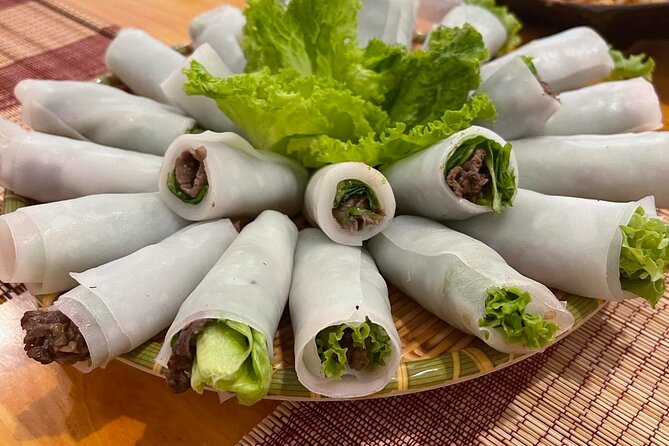
You’ll make fresh rolls, which are all about assembly and timing. Learning how to build a roll well matters because the “right” roll has structure while still feeling light. It’s also a dish that’s easier to recreate later if you remember your method.
Young Jackfruit Salad
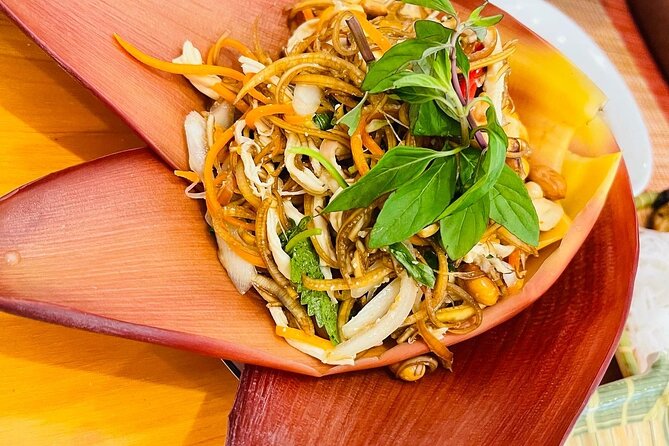
Salads sound simple until you try getting the flavor balance correct. Young jackfruit salad is a good example of Vietnamese flavor logic: fresh, tangy, and satisfying without being one-note. You’ll learn the practical process of combining components so it tastes balanced.
Avocado Ice-Cream
Ending with dessert is a smart move, and avocado ice-cream adds something different from the usual fruit sweets. It also helps you broaden beyond savory cooking, and it’s the kind of dish that feels special even on a casual day.
Across the whole cooking block, the class language is practical: you’re not just learning steps, you’re learning how to recognize what each dish should feel like while you cook it. That’s what makes this kind of class worth your time.
Your Meal Includes Rice Vodka, Plus Receipts for Cooking Later
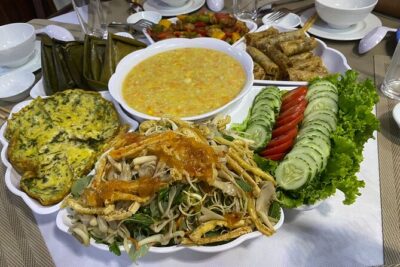
Once you finish cooking, you eat together. That matters more than people think. When you taste what you cooked right after making it, you can connect the flavors to the steps you just did. If something tastes off, you can usually identify why sooner than you would after the fact.
Another fun detail: your meal includes homemade rice vodka. Not everyone will want to try it, and you don’t have to turn it into a challenge. But if you do, it’s part of how Vietnamese hospitality often shows up at the table—informal, social, and tied to the meal.
You also receive a cookbook and a certificate. The cookbook is the practical part: it helps you repeat what you learned. The certificate is the nice bonus if you like keeping a little souvenir that’s actually connected to what you did.
If you’re coming to Da Nang for food, this “cook, eat, take notes” rhythm is a better value than a sightseeing-only outing where you mostly take photos and move on.
Vegetarian, Vegan, and Allergy Requests: A Real Check Before You Book
The class can cater for vegetarian, vegan, and allergies if you mention it when booking. That’s important. Food-focused tours can be hit-or-miss when you have restrictions, because substitutions aren’t always planned.
My advice: don’t wait until the day of the class. Add your request early and be specific about what you avoid. Even if the course already offers options, details help the kitchen plan something that tastes good, not just something that’s technically safe.
This class is also a good fit if you’re traveling with one person who eats differently from the rest of the group. You’re not gambling on finding a workaround at the last minute.
Price and Value: Is $39 Worth It?
At $39 per person, this class is priced like a budget-friendly experience, but it offers more than a simple demonstration. You’re getting:
- a market trip to learn ingredients (with shopping time)
- hands-on cooking for five dishes
- a shared meal, including homemade rice vodka
- a cookbook and certificate
- a class size that stays capped at 30 travelers
- an experience that lasts about 4 hours
In other words, you’re paying for time with food people and a structured practice session. That’s usually the best kind of value in cooking classes: not just eating, but doing.
Where it can be less ideal is if you’re expecting a long, slow, gourmet masterclass. The timeframe is short, and you’ll be moving through five recipes. Still, for most visitors, that compact format is a plus: you get variety without taking over your whole day.
Teacher Experience and English Levels: What to Expect
Many people talk about the instructor experience positively, and one name shows up in the feedback: Jenny. The praise centers on clear explanations and careful teaching, which is exactly what you want when you’re learning recipes on the clock.
At the same time, language support can vary, and one account notes an instructor who didn’t speak English as well. That doesn’t automatically mean you’ll struggle. It does mean you should show up ready to communicate.
Practical tips that work in any cooking class:
- Ask questions during the step that matches your confusion, not after.
- Use a translation app for key ingredient names if you need it.
- Watch hands and plate outcomes. In cooking, visual cues usually carry you far.
Who This Da Nang Cooking Class Is Best For
This is a great choice if you want a food-focused day without turning it into a full-day ordeal. It also suits people who like learning by doing rather than just watching.
You’ll likely enjoy it most if:
- you want to understand ingredients, not just collect recipes
- you like market culture but don’t want the market to be separate from your cooking
- you’d rather cook five classic dishes than sample random street food without context
- you’re traveling as a couple, solo traveler, or small group and want a structured shared meal
If you’re a die-hard foodie who wants long, specialized kitchen time, you might find the four-hour limit a little tight. Still, the market-first format and the variety of dishes help make it feel complete.
Should You Book 5 Dishes Cooking Class with Market Trip in Da Nang?
I’d book it if you’re aiming for one memorable, practical food day in Da Nang. The combination of market shopping, five dishes you cook, and a shared meal is exactly the kind of “I learned something and I ate well” experience that travels well in your memory and your kitchen later.
Two quick decision checks:
- If you hate waiting or you’re on a super tight schedule, build a small buffer for your morning or afternoon. The class timing can be influenced by what happens before your group.
- If you have dietary needs, confirm your vegetarian/vegan/allergy request during booking so the kitchen can plan properly.
If those boxes fit, this is a strong value at $39 for a half-day that gives you skills, food, and take-home recipes.
FAQ
FAQ
Where is the meeting point for the class?
You meet at 07 Nguyễn Bá Lân, Bắc Mỹ An, Ngũ Hành Sơn, Đà Nẵng 550000, Vietnam, about 15 minutes before the start time.
How long does the experience last?
The experience is about 4 hours.
What dishes will I cook?
You cook Bánh Xèo, Bún Bò Huế, Hoi An Fresh roll, Young jackfruit salad, and avocado ice-cream.
Do I eat the food I cook?
Yes. After cooking, you eat the meal together as part of the experience.
Is rice vodka included?
Yes, the meal includes some homemade rice vodka.
Is the tour good for vegetarians or people with allergies?
The class can cater for vegetarian, vegan, and allergies if you mention it in special request when booking.
How big is the group?
The experience has a maximum of 30 travelers.
Is it easy to find on the day?
It uses a mobile ticket, and the meeting point is near public transportation. You’ll start at the listed address.
What happens after the class ends?
The activity ends back at the meeting point.
Can I cancel for a full refund?
Yes. You can cancel up to 24 hours in advance for a full refund, based on local time.
More Shopping Tours in Da Nang
- 5 traditional dishes Da Nang cooking class with market trip
★ 5.0 · 331 reviews - Da Nang Cooking Class with Coffee Tasting and Market Visit
★ 5.0 · 310 reviews - Guided Tour to Marble Mountains & Hoi An Walking Tour , Night Market, Boat Ride
★ 5.0 · 218 reviews - Hoi An Night Market with Hoi an walking Tour , Colourful Lanterns, Boat Ride
★ 5.0 · 142 reviews - DaNang Farm-to-Table Cooking Class with Market and Coffee Tasting
★ 5.0 · 131 reviews - Market Tour, Basket Boat Ride & Cooking Class by Hangcoconut
★ 4.8 · 95 reviews
More Tour Reviews in Da Nang
- Da Nang: Lady Buddha, Marble Mountains, and Am Phu Cave Tour
★ 4.7 · 3,373 reviews - Full Day Golden Bridge and Ba Na Hills Small Group Tour
★ 5.0 · 2,369 reviews - From Da Nang/Hoi An: Golden Bridge Ba Na Hills Full-Day Tour
★ 4.7 · 1,737 reviews - Da Nang: Han River Local Cruise by Night
★ 4.1 · 1,152 reviews - Da Nang: Golden Bridge, Lady Buddha, Marble Mt & Am Phu Cave
★ 5.0 · 1,147 reviews - Morning Small group to Marble Mountains – Am Phu Cave – Monkey Mountain
★ 5.0 · 1,097 reviews
Aprons On in Da Nang
- Da Nang Authentic Home Cooking Class
★ 5.0 · 354 reviews - 5 traditional dishes Da Nang cooking class with market trip
★ 5.0 · 331 reviews - Da Nang Cooking Class with Coffee Tasting and Market Visit
★ 5.0 · 310 reviews - Hoi An: Lantern Making, Basket Boat, and Cooking Class
★ 4.9 · 233 reviews - RICE PAPER Noodle Making Experience & Hoi An Cooking Class Class
★ 5.0 · 164 reviews - DaNang Farm-to-Table Cooking Class with Market and Coffee Tasting
★ 5.0 · 131 reviews
Just Added: The Newest Da Nang Reviews





Da Nang Cooking Classes, side by side.
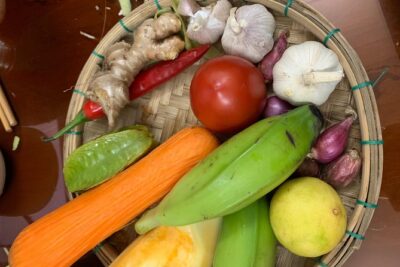 ★ 5.0Da Nang Authentic Home Cooking ClassFrom $36354 reviews
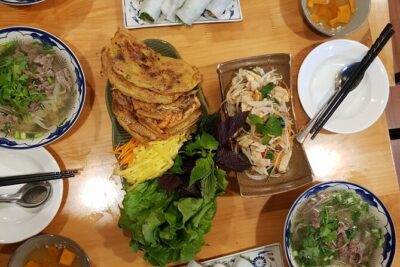 ★ 5.05 traditional dishes Da Nang cooking class with market tripFrom $39331 reviews
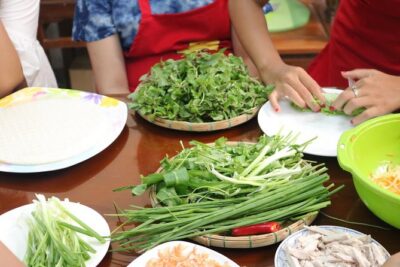 ★ 5.0Da Nang Cooking Class with Coffee Tasting and Market VisitFrom $45310 reviews
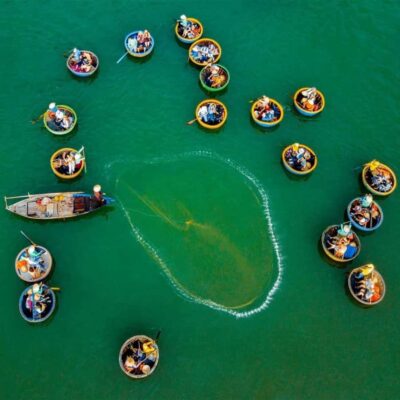 ★ 4.9Hoi An: Lantern Making, Basket Boat, and Cooking ClassFrom $15233 reviews
 ★ 5.0RICE PAPER Noodle Making Experience & Hoi An Cooking Class ClassFrom $33164 reviews
 ★ 5.0DaNang Farm-to-Table Cooking Class with Market and Coffee TastingFrom $60131 reviews
 ★ 5.0My Son Sanctuary Guided Tour with Rice Paper Making from Da NangFrom $27115 reviews
 ★ 4.8Market Tour, Basket Boat Ride & Cooking Class by HangcoconutFrom $1195 reviews
Lists featuring this tour