
REVIEW · DA NANG COOKING CLASSES
5 traditional dishes Da Nang cooking class with market trip
Market mornings in Da Nang taste better. This Da Nang cooking class pairs a shopping walk at Chợ Bắc Mỹ An with hands-on prep of 5 regional dishes. I especially like the practical market start and the way the menu fits different diets with a vegetarian option. One thing to consider: the kitchen session can feel a bit crowded at times, and a couple dishes may be taught with shared prep rather than every bite being 100% individual.
You’ll meet at 07 Nguyễn Bá Lân, Bắc Mỹ An, then cook, eat, and chat your way through Central Vietnam flavors. The class is paced for beginners too, and past sessions have been led by instructors like Blue, Bora, Chi, and Jenny, so you get friendly, clear guidance. If you’re very picky about doing every step completely on your own, plan to be flexible.
In This Review
- Quick hits
- Chợ Bắc Mỹ An first: why the market stop matters
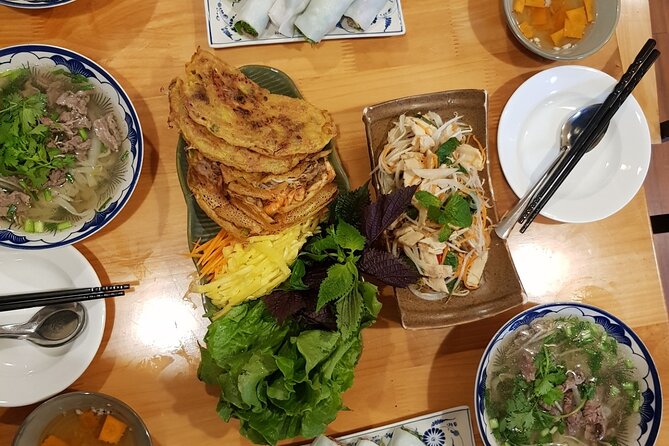
- The 5 dishes: your Central Vietnam crash course
- Bun Bo Huế: beef noodle soup with real personality
- Bánh Xèo: the crispy pancake skill test
- Tam Hữu fresh roll: rolling that tastes fresh, not heavy
- Young jackfruit salad: crunch, herbs, and sour-sweet balance
- Da Nang avocado ice cream (or vegetarian version): the sweet finish
- Inside the kitchen: tools, pacing, and group size reality
- What you eat: lunch, dinner, fruits, and rice vodka
- Taking home more than photos: cookbook and certificate
- Value check: is $39 a good deal in Da Nang?
- Who this class is best for (and who should think twice)
- Quick practical tips before you go
- Should you book Apron Up Cooking Class in Da Nang?
- FAQ
- What’s the duration of the Da Nang cooking class?
- Where does the class meet in Da Nang?
- What is included besides cooking?
- Which traditional dishes will I cook?
- Do you stop at a market before cooking?
- Is there a vegetarian option?
- Is the group size limited?
- Do I need a mobile ticket?
- What’s the cancellation policy?
- Will I get something to take home?
Quick hits
- Market-first shopping at Chợ Bắc Mỹ An so you understand ingredients before you cook them
- 5 hands-on dishes featuring Bun Bo Huế, Bánh Xèo, and fresh rice paper rolling
- Diet-friendly menu options, including a vegetarian version of the avocado ice cream
- Small-group feel at times, with personal attention highlighted in multiple experiences
- Eat what you make plus fruits, coffee or tea, and rice vodka
- Take-home cookbook and certificate for a souvenir that actually helps
Roll up your sleeves at another Da Nang cooking class
- 5 Dishes Cooking Class with Market Trip in Da Nang★ 5.0 · 466 reviews
- Da Nang Authentic Home Cooking Class★ 5.0 · 354 reviews
- 5 traditional dishes Da Nang cooking class with market trip★ 5.0 · 331 reviews
- Hoi An: Lantern Making, Basket Boat, and Cooking Class★ 4.9 · 233 reviews
Chợ Bắc Mỹ An first: why the market stop matters
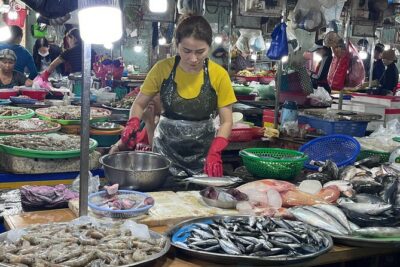
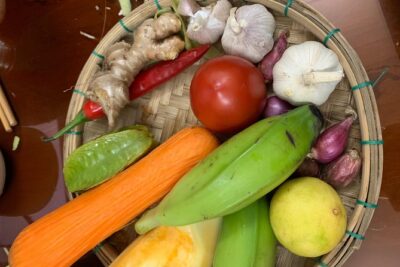
The class starts with a meet-up at 07 Nguyễn Bá Lân, Bắc Mỹ An about 10 minutes before the start time. Then you head to the nearby Chợ Bắc Mỹ An market to shop for ingredients. This is the part I’d call the secret weapon. Seeing produce, herbs, and key pantry items in the place where locals buy them makes the cooking steps make sense fast.
You also get a chance to ask questions that are hard to learn from a recipe card. What cut of an ingredient works best? Which herbs add the right smell? What does the vendor treat as essential versus optional? Even when you’re a beginner, that context helps you avoid the common mistake of trying to recreate Vietnamese food with guesswork.
One small consideration: markets mean sensory overload. Expect noise, crowds, and fast-moving stalls. If you’re sensitive to that, bring patience and comfortable shoes. You’ll be doing more than taking photos; you’re buying the stuff you’ll cook later.
The 5 dishes: your Central Vietnam crash course
This class is built around a balanced menu of five traditional dishes. The big win is variety: you’ll cover savory broth, crispy pancakes, fresh rolls, a crunchy salad, and a sweet finish.
Here’s what you’ll make (and why each dish is worth learning):
Bun Bo Huế: beef noodle soup with real personality
Bún Bò Huế is the one that teaches you about layering flavor. It’s not just “hot soup.” You’re learning how Central Vietnamese recipes build depth so the broth tastes rounded, not flat.
Practical tip: when you learn this dish, focus on balance. If your broth feels off, it’s usually a seasoning step or timing issue, not a missing ingredient from a faraway pantry. Getting that workflow down helps you cook other Vietnamese soups later.
Bánh Xèo: the crispy pancake skill test
Bánh Xèo is your texture lesson. You’ll practice getting a batter to cook into something crispy around the edges while still keeping the fillings tasty. This is often the dish people remember because the learning feels hands-on and immediate.
If you’ve ever tried making any pancake-style dish and ended up with soggy results, you’ll understand why technique matters here. It’s not complicated, but it is precise.
More Da Nang tours we have been out and rated

Tam Hữu fresh roll: rolling that tastes fresh, not heavy
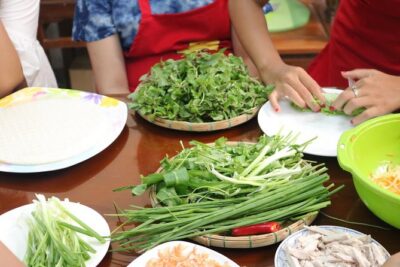
You’ll make Tam Hữu fresh rolls (rice paper rolls). This is the session where you learn the rhythm: dip, fill, roll, and don’t overstuff. Fresh rolls are also a useful skill because they’re forgiving. Even if the first roll isn’t pretty, you’ll still end up eating it.
One practical point from experiences people shared: a roll can sometimes fall apart if it’s handled too roughly or assembled too tightly. Don’t stress. Use it as a learning moment and move on to the next one.
Young jackfruit salad: crunch, herbs, and sour-sweet balance
The young jackfruit salad teaches you how Central Vietnam uses herbs and tangy flavors to cut through richness. It’s not “one note.” It’s crunch + aroma + dressing balance.
For me, salad is where you learn the most about flavor control. If the dressing tastes too sharp or too bland, you’ll feel it immediately. This dish helps you get comfortable adjusting with small additions instead of starting over.
Da Nang avocado ice cream (or vegetarian version): the sweet finish
For dessert, you’ll make Da Nang avocado ice-cream, with a vegetarian version available for vegetarians. Avocado ice cream is a fun way to see how Vietnamese cooking can feel both familiar and surprising at the same time.
Practical takeaway: sweetness and texture matter more than you might expect. This dessert is a nice reset after savory food, and it gives you another “skill category” beyond cooking—making a creamy finish.
Inside the kitchen: tools, pacing, and group size reality
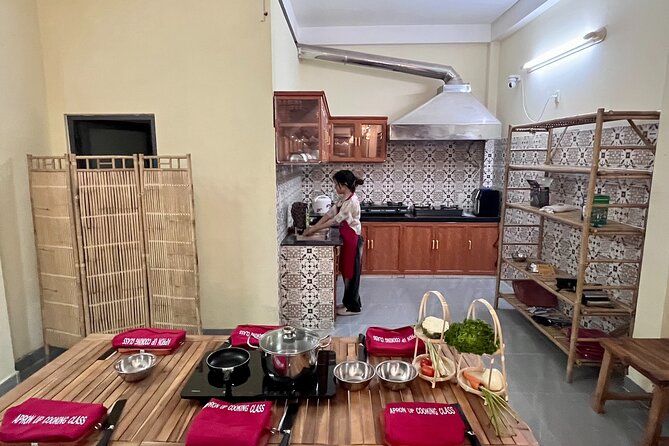
The class includes cooking tools and is set up so you can cook with guidance rather than just watch. You’ll be in a kitchen environment where the instructor demonstrates techniques, then you repeat them. This is ideal for people who want to learn by doing, not just collecting facts.
Group size is capped at a maximum of 30 travelers. That number sounds large, but multiple experiences highlight that the feel can be more personal—one experience specifically mentioned a smaller group size of six, which usually means quicker help and less waiting.
Also keep expectations realistic: sometimes a soup or a multi-step dish may involve shared preparation rather than every student independently doing every single action. If you prefer a class where you personally handle every step start to finish, you might find some parts less hands-on than you’d like. Still, you’ll be eating a meal made from what you learned, not just watching someone else cook and leaving early.
What you eat: lunch, dinner, fruits, and rice vodka
This experience includes lunch and dinner, plus fruits and coffee and/or tea. That matters because a cooking class can sometimes be “demo + snacks.” Here, you’re clearly meant to sit down and actually enjoy the food you made.
You’ll also have rice vodka with the meal. If you don’t drink, you can still join the shared table moment for conversation and food—just keep your comfort in mind. The social side is part of why cooking classes work: you learn by talking while you eat.
One more practical note: you’ll get the meal in a shared setting, so don’t expect a strict, plated-by-one-person experience all the time. Some people like the group vibe; others prefer more space. If you’re trying to photograph everything, arrive with a plan and accept that plates may be served together.
Taking home more than photos: cookbook and certificate
You’ll receive a cookbook and a certificate at the end. That’s a bigger deal than it sounds. A cookbook helps you recreate the same dish later with measurements and steps that match what you were taught. The certificate is a simple, tangible souvenir if you like having proof you did the activity.
If you’re the type who usually takes cooking classes and forgets half the details, the recipe book can make this one stick. You can also use it to compare with what you find at local markets back home.
Value check: is $39 a good deal in Da Nang?
At $39 per person, this class is priced like a budget-friendly food experience, but it doesn’t feel stripped down. You’re paying for more than a cooking lesson:
- Market shopping (Chợ Bắc Mỹ An) where the ingredients are a big part of the experience
- Five dishes with real skill variety: soup, crispy pancake, fresh rolls, salad, and dessert
- Cooking tools provided
- Meals included (lunch and dinner) with fruits, coffee or tea, and rice vodka
- Take-home cookbook and certificate
In plain terms, you’re getting a day segment where you learn shopping habits plus cooking technique, and you don’t have to find another meal after. If you’re already planning to eat your way around Da Nang, the value comes from turning that eating into skills you can reuse.
One reason it sells well is clarity: you know what you’ll cook. No guessing. No surprise menu. And because the menu can be adjusted for dietary needs, you’re less likely to end up with a watered-down substitution.
Who this class is best for (and who should think twice)
This cooking class fits a lot of people:
- Food lovers who want Central Vietnam specifically, not generic “Vietnamese cooking”
- Beginners who want clear instruction and a low-pressure start
- Families: multiple experiences mentioned kids doing well with the instructors’ patience and help
- Vegetarians and mixed-diet groups, since there’s a vegetarian version of the menu item
- People who like social meals, because you eat together at the end
You might want to think twice if you:
- Hate markets and crowds, since the Chợ Bắc Mỹ An stop is part of the core experience
- Expect a perfectly spaced, private cooking station for each dish
- Need every dish prepared completely one-on-one with zero group prep
Quick practical tips before you go
A cooking class works best when you plan for comfort, not perfection.
- Wear comfortable shoes for the market walk.
- Bring a bit of flexibility with timing, since markets and kitchens move at local speed.
- If you have dietary needs, confirm what adjustments are possible when you book. The class notes that the menu is chosen to be flexible for dietary requirements.
- If you’re traveling with kids, this style of guided instruction is a good match, especially because instructors have been noted as patient and supportive.
Should you book Apron Up Cooking Class in Da Nang?
Yes, I’d book it if your goal is to go beyond eating and learn a real slice of Da Nang and Central Vietnam cuisine. Starting at Chợ Bắc Mỹ An, cooking five classic dishes, and ending with lunch, dinner, fruits, and rice vodka for $39 is a strong mix of value and hands-on fun.
Book it especially if you want technique you can repeat later. The cookbook and certificate help make it more than a one-time meal, and the menu’s flexibility makes it easier to include different diets in your group.
If you hate crowded food spaces or you’re extremely strict about individual, step-by-step cooking for every dish, then look for a more private option. Otherwise, this one is a straightforward, rewarding way to spend a half day in Da Nang.
FAQ
What’s the duration of the Da Nang cooking class?
The class runs for about 4 hours.
Where does the class meet in Da Nang?
Meet at 07 Nguyễn Bá Lân, Bắc Mỹ An, Ngũ Hành Sơn, Đà Nẵng 550000, Vietnam.
What is included besides cooking?
It includes coffee and/or tea, lunch, dinner, cooking tools, and you’ll also receive a cookbook and certificate.
Which traditional dishes will I cook?
You’ll cook Bun Bo Hue, Banh Xeo, Tam Huu fresh roll, young jackfruit salad, and Da Nang avocado ice-cream (or a vegetarian version).
Do you stop at a market before cooking?
Yes. You visit Chợ Bắc Mỹ An to learn about local produce and shop for ingredients.
Is there a vegetarian option?
Yes. The class can provide a vegetarian version (including a vegetarian option for the avocado ice cream).
Is the group size limited?
Yes, the tour has a maximum of 30 travelers.
Do I need a mobile ticket?
Yes, it includes a mobile ticket.
What’s the cancellation policy?
You can cancel for a full refund up to 24 hours before the experience start time. Within 24 hours, the amount paid is not refunded.
Will I get something to take home?
Yes. You receive a cookbook and a certificate at the end of the class.
More Shopping Tours in Da Nang
- 5 Dishes Cooking Class with Market Trip in Da Nang
★ 5.0 · 466 reviews - Da Nang Cooking Class with Coffee Tasting and Market Visit
★ 5.0 · 310 reviews - Guided Tour to Marble Mountains & Hoi An Walking Tour , Night Market, Boat Ride
★ 5.0 · 218 reviews - Hoi An Night Market with Hoi an walking Tour , Colourful Lanterns, Boat Ride
★ 5.0 · 142 reviews - DaNang Farm-to-Table Cooking Class with Market and Coffee Tasting
★ 5.0 · 131 reviews - Market Tour, Basket Boat Ride & Cooking Class by Hangcoconut
★ 4.8 · 95 reviews
More Tour Reviews in Da Nang
- Da Nang: Lady Buddha, Marble Mountains, and Am Phu Cave Tour
★ 4.7 · 3,373 reviews - Full Day Golden Bridge and Ba Na Hills Small Group Tour
★ 5.0 · 2,369 reviews - From Da Nang/Hoi An: Golden Bridge Ba Na Hills Full-Day Tour
★ 4.7 · 1,737 reviews - Da Nang: Han River Local Cruise by Night
★ 4.1 · 1,152 reviews - Da Nang: Golden Bridge, Lady Buddha, Marble Mt & Am Phu Cave
★ 5.0 · 1,147 reviews - Morning Small group to Marble Mountains – Am Phu Cave – Monkey Mountain
★ 5.0 · 1,097 reviews
Aprons On in Da Nang
- 5 Dishes Cooking Class with Market Trip in Da Nang
★ 5.0 · 466 reviews - Da Nang Authentic Home Cooking Class
★ 5.0 · 354 reviews - Da Nang Cooking Class with Coffee Tasting and Market Visit
★ 5.0 · 310 reviews - Hoi An: Lantern Making, Basket Boat, and Cooking Class
★ 4.9 · 233 reviews - RICE PAPER Noodle Making Experience & Hoi An Cooking Class Class
★ 5.0 · 164 reviews - DaNang Farm-to-Table Cooking Class with Market and Coffee Tasting
★ 5.0 · 131 reviews
Just Added: The Newest Da Nang Reviews




Da Nang Cooking Classes, side by side.
 ★ 5.05 Dishes Cooking Class with Market Trip in Da NangFrom $39466 reviews
 ★ 5.0Da Nang Authentic Home Cooking ClassFrom $36354 reviews
 ★ 5.0Da Nang Cooking Class with Coffee Tasting and Market VisitFrom $45310 reviews
 ★ 4.9Hoi An: Lantern Making, Basket Boat, and Cooking ClassFrom $15233 reviews
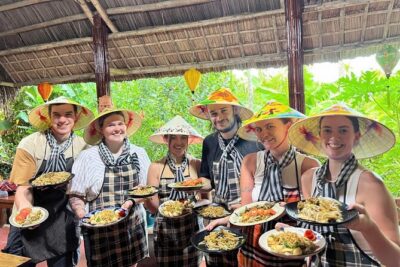 ★ 5.0RICE PAPER Noodle Making Experience & Hoi An Cooking Class ClassFrom $33164 reviews
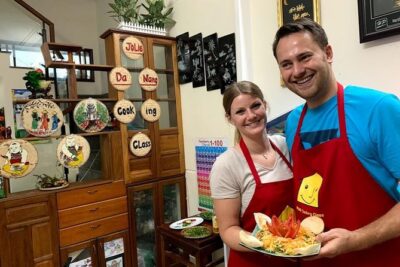 ★ 5.0DaNang Farm-to-Table Cooking Class with Market and Coffee TastingFrom $60131 reviews
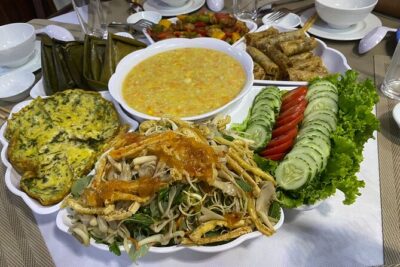 ★ 5.0My Son Sanctuary Guided Tour with Rice Paper Making from Da NangFrom $27115 reviews
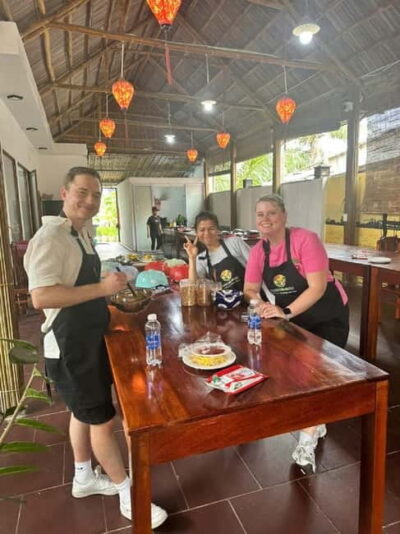 ★ 4.8Market Tour, Basket Boat Ride & Cooking Class by HangcoconutFrom $1195 reviews
Lists featuring this tour