
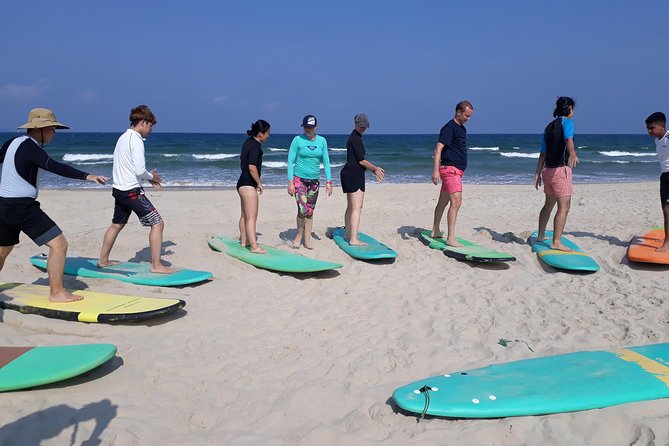
REVIEW · PARAGLIDING & ADVENTURE SPORTS
Surf Lessons
Surfing in Da Nang feels way more doable. You’re guided step by step at My Khe Beach, with a small class and lots of actual time in the waves.
What I like most is how the lesson is built for first-timers: you start with basics on land (paddle, pop-up, balance, and safety), then you head out to practice. I also really appreciate the 1:4 instructor-to-student ratio and the upbeat coaching style you’ll get from instructors like Owen and Tien—friendly, patient, and focused on helping you stand up and catch waves.
The main thing to consider is that 2 hours goes fast. If you burn fast in the sun, you’ll feel it, so bring water-resistant sunscreen—one person even noted they underestimated the sun’s power during a short session. Also, photo and video delivery happens later, and timing can vary.
In This Review
- Key highlights worth knowing
- My Khe Beach: the training wheels for surfing in Da Nang
- The 2-hour lesson flow: from paddle to pop-up to real waves
- What’s included: boards, wax, rash vests, and wetsuits
- Instructors and feedback: why small classes change everything
- Price and value: how $44 buys more than you expect
- Your practical game plan before you show up
- Who this surf lesson fits best
- Should you book this Da Nang surf lesson?
- FAQ
- Where does the surf lesson take place?
- How long is the surf lesson?
- How much does it cost?
- Is this lesson for beginners?
- What equipment is provided?
- How big are the groups?
- Do you get photos or video?
- Is it offered year-round?
- What happens if weather is poor?
Key highlights worth knowing
- My Khe Beach conditions are a strong match for learning: sandy feel, gentle beginner waves, and calmer vibes for your first session.
- Small groups (max 6) with a 1:4 ratio means you’re not just watching; you’re getting hands-on feedback.
- Land drills + water practice: paddle, pop-up, and balance first, then you apply it immediately.
- All gear included: rash vests, wetsuits, wax, and surfboards (so you travel lighter).
- GoPro photos and video get captured during the lesson, then shared with you later.
Trade the sightseeing for something with a pulse
- Da Nang Private paragliding experience on Monkey Mountain★ 5.0 · 93 reviews
- Private Paragliding Experience in Da Nang★ 5.0 · 54 reviews
- Da Nang: Hoa Phu Thanh Rafting Ticket★ 3.9 · 29 reviews
- Private Half Day Jeep Tour in Son Tra Peninsula★ 5.0 · 28 reviews
My Khe Beach: the training wheels for surfing in Da Nang
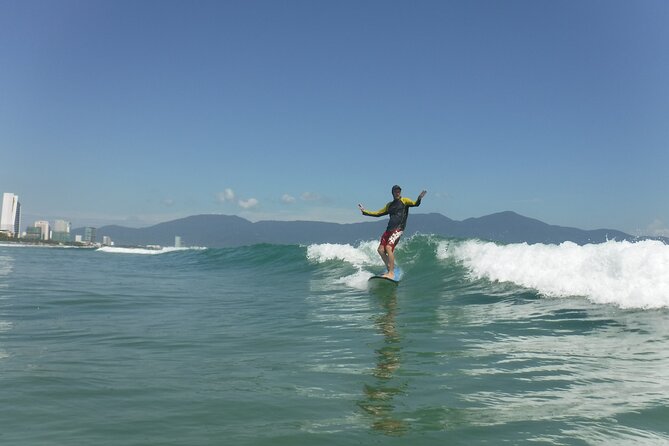
If you’re new to surfing, you want two things: waves that don’t feel like a boss fight, and a beach that won’t punish you for wiping out. My Khe Beach is widely known for being a great learning spot, and it’s also singled out as one of Forbes top beaches worldwide. That reputation matters because it lines up with what you need on day one: manageable conditions and a big, forgiving sandy setup.
The lesson here is set up around the idea that you’ll build confidence quickly. Reviews highlight fine sand and waves that aren’t too big for beginners, plus a sense of comfort in the water (no worries about jellyfish being mentioned in the feedback). In practice, that means you can focus on the actual skill—paddle timing, stance, and getting to your feet—without spending your brain on fear.
One more benefit: this area is set up for activity. You’ll be based near the beachfront and a short walk from the action, so it doesn’t feel like a long, exhausting commute before you even touch a board.
The 2-hour lesson flow: from paddle to pop-up to real waves
This is an introductory surf lesson designed around a simple progression. The class starts with instruction on land, then moves to the water for focused practice. The goal is not just to stand up once—it’s to leave you with the basics so you can start catching waves on your own later.
Here’s what you can expect in the order you’ll learn it:
- Start on land: You’ll go through how to paddle, how to pop up, and how to find balance on the board. You’ll also cover water safety basics before anyone sends you out.
- Quick instructor demonstration: Your instructor will show how to catch a wave. This matters because you’re not guessing what “good” looks like—you can copy the timing and body position.
- Practice in the waves: After the demo, most of the lesson is spent on the water catching loads of waves.
The structure is smart for learning fast. Surfing has a lot going on at once, and first-time bodies need a repeatable sequence. By doing the main movements on land first, you reduce the chaos when you finally meet the wave.
Also, because your class is small (max 6) and the ratio is 1:4, coaching can actually be immediate. You’re not stuck waiting your turn while others take waves. That pacing is a big reason beginners tend to walk away feeling proud instead of frustrated.
One small but real bonus: GoPro photos and videos are taken during your session. So when you’re back on shore, you’re not relying only on memory of what you did right or wrong.
What’s included: boards, wax, rash vests, and wetsuits
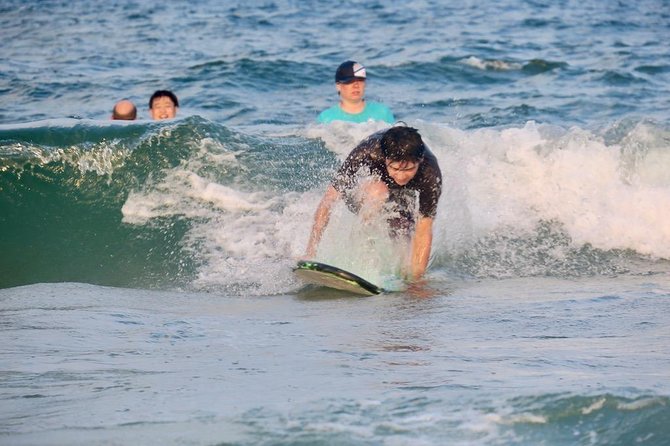
A surf lesson can get expensive fast if you end up renting gear separately. This one keeps it simple: everything you need is included for the lesson.
Included items:
- Rash vests for summer
- Wetsuits for winter
- Wax
- Surfboards
That gear setup is one of the best value signals here. If you’re traveling, you don’t want to pack a wetsuit or scramble for a board rental the day you arrive. With this, you show up and they fit you into what you need for the conditions.
It also tells you something about the teaching approach: since the lesson can run in different seasons (rash vests in warmer months, wetsuits in cooler months), the school is set up to keep you comfortable enough to practice. That comfort matters because learning requires repetition, and cold or discomfort kills repetition.
Beginner boards are also mentioned as part of their offerings. Even though the lesson itself includes the surfboard, it’s a good sign if you want to keep going after your first try.
Instructors and feedback: why small classes change everything
In surfing, the difference between progress and staying stuck is feedback. A lot of people struggle because they get one generic tip and then disappear into the ocean. Here, the 1:4 instructor/student ratio is a big deal, especially for a first lesson.
You’ll get continuous guidance through the learning stages—paddling technique, pop-up mechanics, and how to position your body as you aim to catch the wave. Reviews repeatedly describe instructors as welcoming, friendly, and encouraging, with a “keep going” energy that helps first-timers stay calm when things don’t work instantly.
Two names came up in the feedback: Owen and Tien. People specifically called out that the staff were patient and that the instructors helped them stand up, catch waves, and get confident enough to ride independently for at least a few moments.
That’s an important takeaway: this lesson isn’t presented as a quick photo op. It’s taught as a skills session. The promise is that you’ll get the fundamental knowledge to begin catching waves—then the instructor keeps working with you until that promise starts to feel real.
More Da Nang tours we have been out and rated



Price and value: how $44 buys more than you expect
At $44 per person for about 2 hours, the big value isn’t just the price tag. It’s what’s bundled into the session.
You’re paying for:
- A qualified instructor with long experience (over 20 years is stated)
- Small-group coaching (max 6 travelers)
- A full beginner progression (land fundamentals + water practice)
- Included equipment (rash vest/wetsuit, wax, board)
- GoPro photos/videos after the lesson
If you’ve tried booking activities in beach destinations, you know how often the “cheap” option turns into add-ons. Here, that risk feels lower because the essential surf gear and coaching time are part of the package.
There’s also practical value in timing. The lesson is booked on average about 12 days in advance, which suggests it’s popular around that area and season. If you’re coming during a busy travel window, booking ahead helps you lock in a slot without stress.
Your practical game plan before you show up
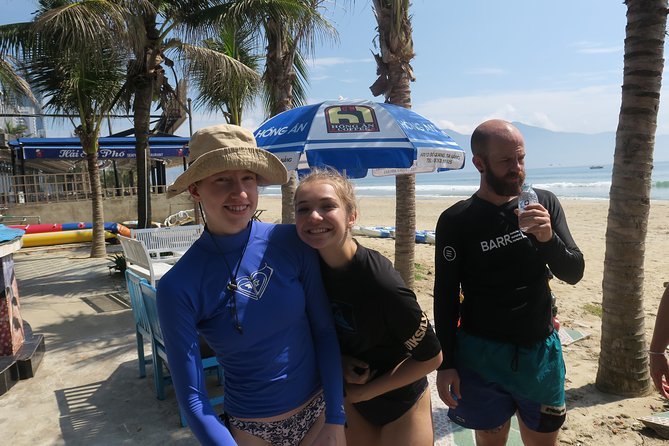
You don’t need to be a gear expert. But a few practical choices can make the lesson smoother.
Here’s what’s worth planning:
- Use sunscreen, and make it water-resistant. One review specifically flagged that they underestimated sun exposure during a 2-hour surf session. That’s exactly the kind of mistake that ruins your next day.
- Expect a learning workout. Even for beginners, paddling and trying the pop-up can be tiring. Bring a positive mindset and be ready to laugh when you don’t stand immediately.
- Arrive ready to swap into surf gear. The lesson includes rash vests in summer and wetsuits in winter, so dress in a way that’s easy to adapt.
- Use the meeting point you’re given. The start location is at 35 An Thượng 5, Ngũ Hành Sơn, Đà Nẵng 550000, Vietnam, and the activity ends back at the meeting point.
- Keep your ticket on your phone. It’s a mobile ticket, so having it accessible helps.
- Plan for the photos/videos email. You’ll get photos and videos later (GoPro capture). If you’re expecting them for an event the next day, give yourself a buffer.
Small effort on your side means more energy for the waves.
Who this surf lesson fits best
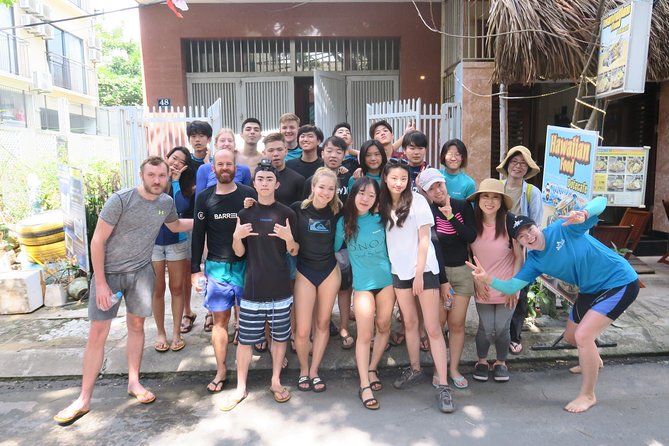
This works especially well if you’re:
- Trying surfing for the first time
- Looking for a structured lesson rather than trial-and-error
- The kind of person who learns faster with hands-on coaching and a small group
The session is described as accessible to most travelers, and the maximum group size keeps it personal. If you’re traveling with friends, the small class size also helps keep everyone together through the main steps.
If you’re already confident on a board and want a longer session with advanced technique, you might still enjoy this as a warm-up, but you may find the short duration limits how much you can improve. This is designed as a first-timer introduction.
Should you book this Da Nang surf lesson?
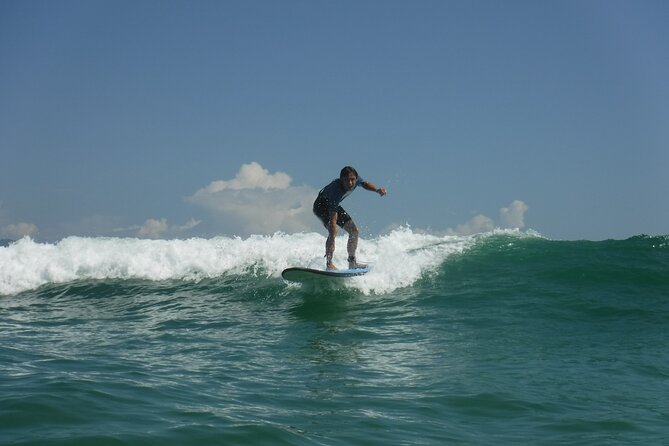
If you want an honest, confidence-building first surf experience, I think this booking makes sense. You’re set up for learning with a clear progression, small group coaching, included gear, and a beach that’s known for beginner-friendly conditions. Reviews also strongly back the vibe: instructors are friendly and encouraging, and people leave with real momentum like standing up and catching waves during their first lesson.
Book it if:
- You’re a beginner and want lots of time actually in the water
- You want equipment included so you don’t stress about rentals
- You like the idea of getting GoPro photos/videos afterward
Skip or think twice if:
- You’re very sensitive to sun and forgot sunscreen (you’ll feel it)
- You need instant photos/videos right after the lesson (the GoPro capture is sent later)
Overall, this is a straightforward way to try surfing in one of Da Nang’s best beach settings without making it complicated.
FAQ
Where does the surf lesson take place?
The lesson is based around My Khe Beach in Da Nang, Vietnam. The activity starts at 35 An Thượng 5, Ngũ Hành Sơn, Đà Nẵng 550000, Vietnam and ends back at the meeting point.
How long is the surf lesson?
The surf lesson lasts about 2 hours.
How much does it cost?
The price is $44.00 per person.
Is this lesson for beginners?
Yes. It’s an introductory lesson designed to teach the basics, starting with land instruction on paddle, pop up, and balance, then moving into the waves.
What equipment is provided?
Everything needed is included: rash vests or wetsuits, wax, and surfboards.
How big are the groups?
The experience has a maximum of 6 travelers, with an instructor/student ratio stated as 1:4.
Do you get photos or video?
Yes. The instructors take GoPro photos and videos and will send them to you later.
Is it offered year-round?
Yes. They use rash vests for summer and wetsuits for winter, so the lesson runs all year round.
What happens if weather is poor?
The experience requires good weather. If it’s canceled due to poor weather, you’ll be offered a different date or a full refund.
More Workshops in Da Nang
- Da Nang Coffee Making Workshop
★ 4.9 · 543 reviews - 5 Dishes Cooking Class with Market Trip in Da Nang
★ 5.0 · 466 reviews - Da Nang Authentic Home Cooking Class
★ 5.0 · 354 reviews - 5 traditional dishes Da Nang cooking class with market trip
★ 5.0 · 331 reviews - Da Nang Cooking Class with Coffee Tasting and Market Visit
★ 5.0 · 310 reviews - Hoi An: Lantern Making, Basket Boat, and Cooking Class
★ 4.9 · 233 reviews
More Tour Reviews in Da Nang
- Da Nang: Lady Buddha, Marble Mountains, and Am Phu Cave Tour
★ 4.7 · 3,373 reviews - Full Day Golden Bridge and Ba Na Hills Small Group Tour
★ 5.0 · 2,369 reviews - From Da Nang/Hoi An: Golden Bridge Ba Na Hills Full-Day Tour
★ 4.7 · 1,737 reviews - Da Nang: Han River Local Cruise by Night
★ 4.1 · 1,152 reviews - Da Nang: Golden Bridge, Lady Buddha, Marble Mt & Am Phu Cave
★ 5.0 · 1,147 reviews - Morning Small group to Marble Mountains – Am Phu Cave – Monkey Mountain
★ 5.0 · 1,097 reviews
For the Adrenaline Set
- Da Nang Private paragliding experience on Monkey Mountain
★ 5.0 · 93 reviews - Private Paragliding Experience in Da Nang
★ 5.0 · 54 reviews - Da Nang: Hoa Phu Thanh Rafting Ticket
★ 3.9 · 29 reviews - Private Half Day Jeep Tour in Son Tra Peninsula
★ 5.0 · 28 reviews - From Da Nang: Explore Hai Van Pass by US Army Jeep
★ 4.7 · 25 reviews - Private Jeep tour Monkey Mountains -Son Tra and Marble by SUV car
★ 5.0 · 21 reviews
Just Added: The Newest Da Nang Reviews




Paragliding & Adventure Sports, side by side.
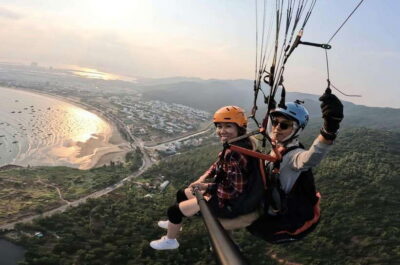 ★ 5.0Da Nang Private paragliding experience on Monkey MountainFrom $8893 reviews
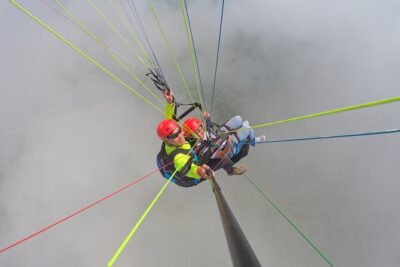 ★ 5.0Private Paragliding Experience in Da NangFrom $8754 reviews
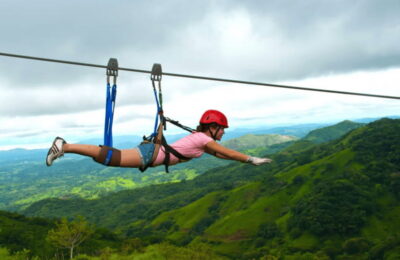 ★ 3.9Hoa Phu Thanh Rafting TicketFrom $1729 reviews
 ★ 5.0Private Half Day Jeep Tour in Son Tra PeninsulaFrom $5928 reviews
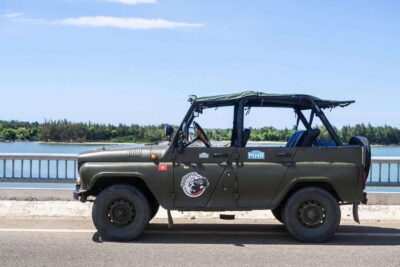 ★ 4.7From Da Nang: Explore Hai Van Pass by US Army JeepFrom $9625 reviews
 ★ 5.0Private Jeep tour Monkey Mountains -Son Tra and Marble by SUV carFrom $8521 reviews
 ★ 5.0Private Jeep Tour to Marble – Monkey Mountains -Son Tra peakFrom $6513 reviews
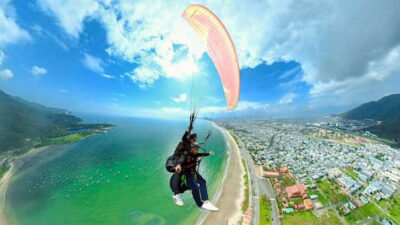 ★ 4.4Paragliding with Views of Lady Buddha Statue 2025From $9611 reviews
Lists featuring this tour