
REVIEW · FOOD & DRINK
Vietnam/Lang Co Oyster Tour by Fishing & Tasting Oyster Flavors
Oysters, boats, and mountains in one trip. This Da Nang oyster tour strings together Hai Van Pass views, Lap An Lagoon fishing, and a dockside lunch where you taste oysters in several styles. I love the hands-on feel of the long-tailed boat fishing and the fact that your oyster tasting happens right after harvesting. The only real heads-up: if the weather turns rough, the lagoon boat portion can shift to a simpler oyster-tasting stop on land.
I also like how the day mixes big scenery with small, human details: Red Beach’s crescent shape, Hai Van’s dragon-shaped ridge, and the local rhythm of oyster farming. You get a full food-and-drink focus without having to hunt down restaurants afterward, and it runs about 5 hours. The price sits in the mid-range for a guided day trip, but it includes transport, admissions, and multiple tastings.
One more thing to know before you book: this is a private experience for your group, so the itinerary is more “follow the guide” than “wander at your own pace.” If you prefer lots of free time, plan to enjoy the scheduled flow (and bring patience for road sights and weather changes).
In This Review
- Key Highlights You’ll Care About
- From Red Beach to Hai Van Pass: Why the drive matters
- The Hai Van Tower stop and the French–Spanish story
- Lang Co Beach break: a quick reset before the lagoon
- Lap An Lagoon and the airplane-era long-tail boat
- Rolling-net fishing: learning by doing (not just watching)
- Oyster farm life: how oysters live, rise, and get harvested
- The dockside lunch: live, steamed, grilled, and served fast
- Rice wine and Hue beer: the drink pairing that keeps things local
- Hai Van Tunnel return: getting back with a last view
- Price and value: what $69 buys you (and what it doesn’t)
- Weather plans, timing, and practical tips that help
- Should you book this Lang Co oyster tour?
Key Highlights You’ll Care About
- Hai Van Pass first, oyster lunch second: the scenery-heavy drive sets the tone before you hit the lagoon.
- Rolling-net fishing with local fishermen: you don’t just watch fish—you learn the technique.
- A dock lunch that matches the day’s work: oysters you pick/see are then served in multiple styles.
- Rice wine and Hue beer pairings: included drinks make the meal feel like a local celebration.
- Weather-adapted plan: when conditions aren’t safe, you still get oyster tastings without going out to the middle of the lagoon.
- Hung and Thanh’s role: having an English-speaking guide and a dedicated driver keeps the whole day smooth.
More Da Nang tours we have been out and rated
- Da Nang & Hoi An: Food, Sightseeing, Culture & Hidden Gems★ 5.0 · 806 reviews
- Da Nang Cooking Class with Coffee Tasting and Market Visit★ 5.0 · 310 reviews
- DaNang Night Foodie Tour-Sighseeing with Aodai Lady Rider Private★ 5.0 · 255 reviews
- Da Nang Local Food Tour★ 5.0 · 247 reviews
From Red Beach to Hai Van Pass: Why the drive matters
Most Da Nang food tours stop at the food. This one starts earlier, with the roads that make central Vietnam feel dramatic. You head out from Da Nang with pickup included, then roll along the coast where Red Beach forms a crescent. It’s not just pretty—this stretch quickly gives you a sense of how the area connects ocean, bays, and working shorelines.
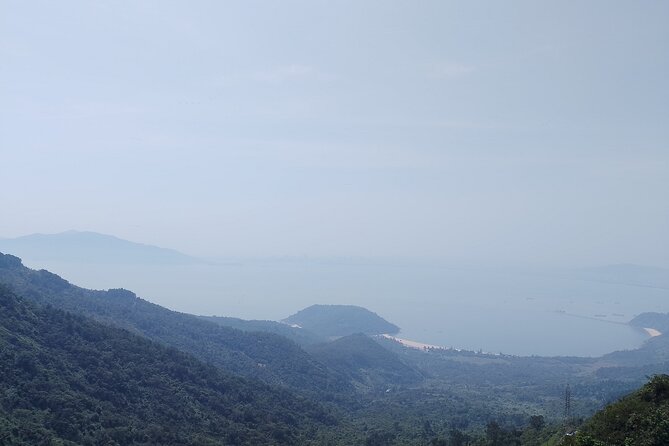
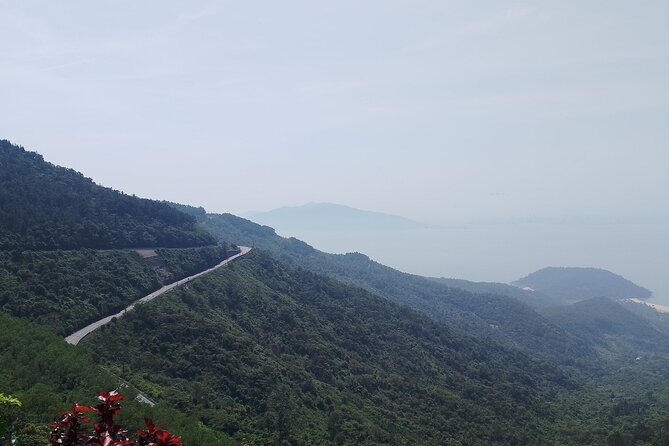
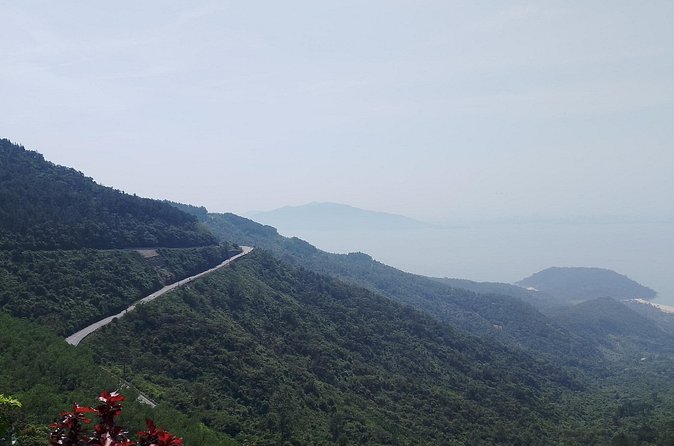
Then the route turns toward Hai Van Pass. Locals describe the pass as dragon-shaped, and you’ll see why once you’re up there. The drive covers about 20 km along the ridge, with long ocean views on one side and the mountains on the other. Even if you’re not a car-scenery person, this part helps explain why oyster farming and fishing make sense here: the water and the protected coastal conditions are part of everyday life.
The other practical value: you’re not trying to piece together a complicated day on your own. One pickup, one guide, one rhythm, and the sights stack in a logical order—scenery, fishing, then lunch. If you like your travel days with both views and a reason to get moving, this structure works.
The Hai Van Tower stop and the French–Spanish story
At Hai Van, you stop at Hai Van Tower, which sits above 500 meters sea level. This is a great spot for taking in the coastline and the pass below. But it’s also where the guide adds context—history tied to French and Spanish-era conflict in the region. The key is not heavy lectures; it’s the kind of story that helps you connect the landscape you’re seeing to what happened here over time.
You’ll likely notice how guides in Vietnam often use viewpoints like this as teaching tools. From high ground, it’s easier to imagine why control of passes and coastal routes mattered. If you enjoy learning while you’re actually looking at something, this stop pays off.
Potential drawback? If you’re not into history at all, the tower moment can feel like a short detour. Still, it’s brief, it’s on the way, and it gives you that top-of-the-pass perspective that you can’t get from the coast.
Lang Co Beach break: a quick reset before the lagoon
You also pause at Lang Co Beach. For many people, this acts like a palate cleanser—fresh air, a chance to stretch your legs, and time to see the coast from a different angle. Lang Co is known for the way the water meets the shore, and the timing here is smart: you’re not hungry yet, but you’re close enough to the next activity that you stay mentally in the day.
Don’t expect a long beach day. This is still a 5-hour program, and the schedule is clearly built around getting you out on the lagoon and then back to the dock for food. Think of Lang Co as a short photo and breath stop, not a full rest break.
If weather is good, the coast portion tends to feel extra rewarding because you can actually see the sea clearly. If it’s gloomy, you’ll still get the learning and lunch—but the best part of the coastline is less dramatic.
Lap An Lagoon and the airplane-era long-tail boat
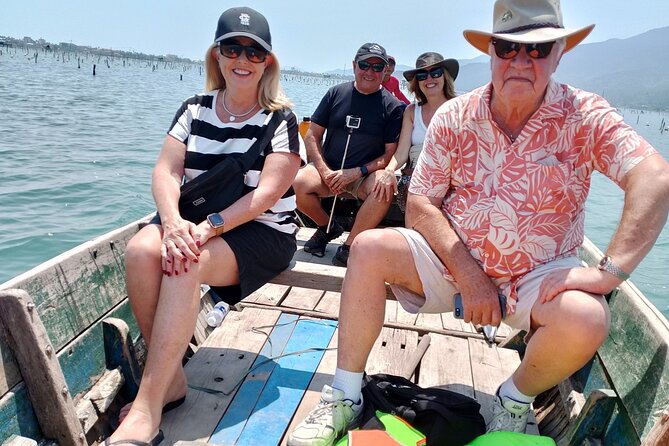
Now comes the moment that makes this tour feel different from standard seafood meals: you head to Lap An Lagoon by long-tailed boat. The boat used for the oyster-farm journey is described as an older long-tailed style made from an airplane in the 1990s. It’s unusual enough that you’ll remember it even if you’ve done other boat trips around Vietnam.
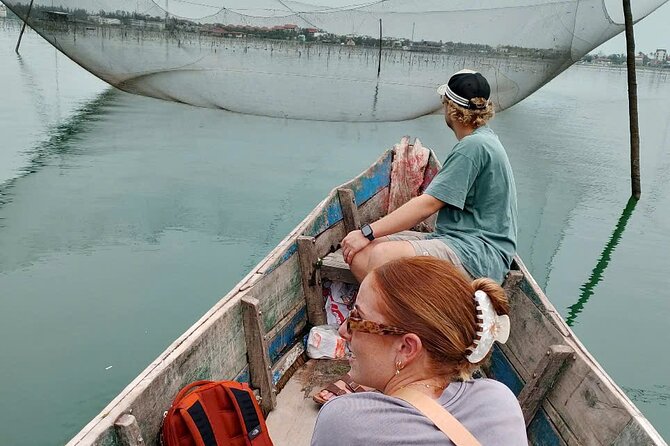
Once you’re on the water, the atmosphere changes. The lagoon feels more working and local than touristy. The pace slows, and you start noticing the oyster-farm setups—structures where oysters grow and are managed. This is where the tour earns its name: oyster flavors don’t start at the table; they start in the water.
Plan on about 2 hours on the lagoon with local fishermen. That’s a real chunk of time, and it means you’ll have more than a quick look. You’ll get the chance to learn, watch, and then see how oyster harvesting feeds into the meal that follows.
More Da Nang tours we have been out and rated

Rolling-net fishing: learning by doing (not just watching)
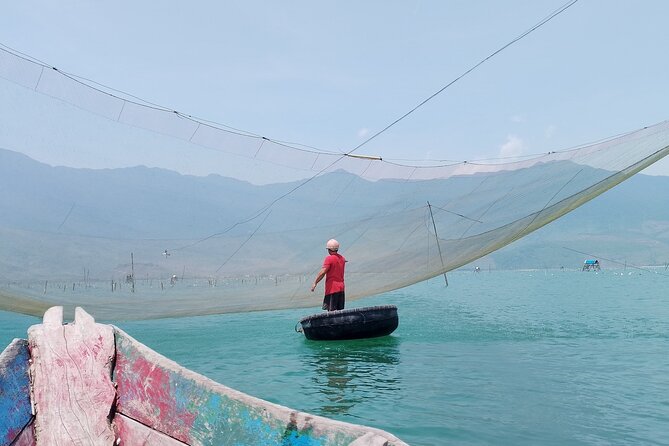
One of the most practical parts is the fishing activity using a rolling net. The guide and local fishermen show a technique where the net is rolled using your feet as it goes up and down on the water. It’s not described as a performance—you’re learning the motion that makes the net work.
This is the kind of activity that makes the rest of the day make more sense. Once you understand even a little about how fishing is done here, the oyster farming story feels less like a demo and more like a whole system of livelihoods. You’re seeing how people earn a living from the lagoon environment.
Also, don’t assume it will be all action. In real working lagoons, there’s time between steps. You’ll watch the fishermen work and learn as the boat moves into position. If you’re the type who likes hands-on travel moments, this portion is a strong reason to choose this over a simple restaurant meal.
Oyster farm life: how oysters live, rise, and get harvested
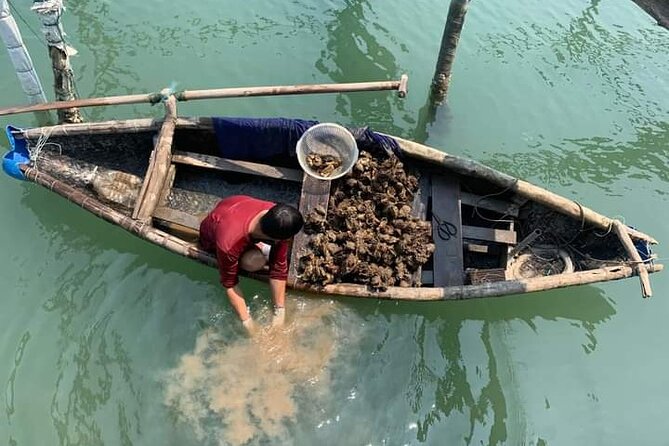
When you reach the oyster-farm area, local fishermen show you how oysters live and how harvesting works. You’ll learn the idea that oysters aren’t just pulled from water like souvenirs; they’re raised and managed until they’re ready. The tour describes oysters rising up as part of their life process in the farm setup, which helps you understand why this place produces reliable harvests.
Then you can pick oysters for your taste. That matters because it turns the lunch into a result of the morning’s work. Even if you don’t pick a whole bunch, the act of choosing connects you to the food in a way that feels more grounded than ordering.
This farm-and-harvest sequence is also why the tour can feel more “experience” than “tasting session.” You’re not just sampling sauces. You’re seeing where the oysters come from, with fishermen explaining what to look for and how harvesting happens.
The dockside lunch: live, steamed, grilled, and served fast
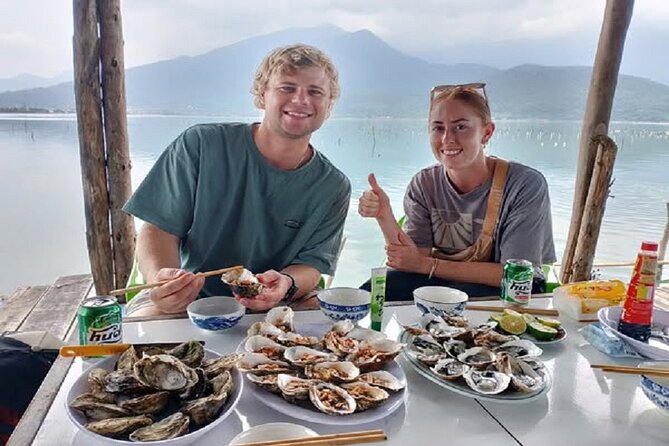
After your lagoon time, you return to the dock. This is where the experience turns into a proper meal. The tour includes tasting oysters prepared in several ways—live oysters, steamed, and grilled—plus different dipping sauces.
The lunch is described as prepared by the wife (of the local fishermen), which is exactly the kind of detail that makes a food tour feel real. It’s not a staged kitchen. It’s a household-style preparation where the oysters you saw earlier become the meal in front of you.
You’ll also notice the rhythm: you’re not waiting hours. The oysters are served for tasting right after you learn and pick. That freshness angle is part of the value because it makes your tasting meaningful. If you’ve ever had oysters that tasted like they came from a long chain of handling, you’ll appreciate this “right-now” approach.
One small consideration: live oysters aren’t everyone’s thing. The tour does include steamed and grilled options, so you have choices. If you’re unsure, start with the style you feel most comfortable eating.
Rice wine and Hue beer: the drink pairing that keeps things local
The tasting includes 2–3 glasses of traditional Vietnam rice wine. It’s served alongside oyster tastings and is part of why this lunch feels like a local event rather than a food stop. If you enjoy trying regional drinks, rice wine adds another layer to the flavor experience.
There’s also cold beer from Hue included during the meal. That combination—rice wine for a lighter sip-and-learn moment and beer to cool things down—helps the meal stay relaxed. It’s also a good reminder that this isn’t just about oysters; it’s about how people drink and eat together on the coast.
Practical tip: rice wine can be stronger than you expect, especially if you’re also eating salty oysters. Keep pace with water, and don’t treat it like a shot challenge.
Hai Van Tunnel return: getting back with a last view
After lunch, the tour drives you back to Da Nang via Hai Van Tunnel, described as the longest tunnel in South East Asia. Even if the tunnel itself isn’t the reason you book, the return route matters because it helps you finish the day without backtracking the same winding pass roads.
You’re likely to have a final chance to reflect on what you saw: mountains, lagoon work, and an oyster lunch that actually tracks back to the water. That’s one reason the tour feels satisfying. It’s not just a meal; it’s a full loop from coast to food to city pickup.
The day ends around the 5-hour mark. If you’re trying to plan dinner afterward, you’ll probably feel good about just grabbing something light.
Price and value: what $69 buys you (and what it doesn’t)
At $69 per person for about 5 hours, this is priced like a mid-range guided experience. The value is in what’s included:
- pickup from Da Nang city
- mineral water on the car
- English-speaking guide options (when selected)
- boat transport to the oyster-farm and lagoon activities
- oyster tastings in multiple styles
- 2–3 glasses of rice wine
- cold beer from Hue during the meal
- all admission entry fees
You’re also getting an activity component—rolling-net fishing and oyster farm learning—so it’s not only a restaurant visit. In practice, that means you’re paying for access, time, and a local teaching team.
What you should budget for separately: personal expenses and tips. If you’re the sort of person who always tips and buys extra drinks or snacks, factor that in. Also, since it’s a private group experience, your per-person price may feel more like a team decision than a solo bargain. If you’re traveling with friends, it tends to feel easier to justify.
Weather plans, timing, and practical tips that help
This tour explicitly notes a weather contingency: if conditions are bad, you’ll go to a local house for oyster tasting instead of boating to the middle of the lagoon. That’s important for two reasons. First, it means you’re less likely to lose the entire experience. Second, it keeps safety and comfort in mind when the water is rough.
Timing-wise, the key block is the 2 hours on the lagoon. If you get sea conditions that are less comfortable, that lagoon time will feel the most challenging part of the day. Consider simple comfort prep:
- wear footwear you can walk in confidently on boat docks
- bring a light layer; sea air can feel cooler even in warmer months
- keep a rain layer handy if skies look doubtful
And if you’re unsure about oysters, start with steamed or grilled. Live oysters are included, but you still get choices through the tasting lineup.
Should you book this Lang Co oyster tour?
Book it if you want a Da Nang food experience that doesn’t feel like a single meal stop. The best reason is the full story arc: Hai Van Pass scenery, Lap An Lagoon fishing with local fishermen, oyster farm harvesting, and then a dockside lunch where the oysters match what you learned earlier. I’d also pick this if you like guided days that include both human moments and practical hands-on time—especially with Hung as the guide and Thanh behind the wheel.
Skip it if you hate car time, dislike any alcohol pairings, or want long stretches of free wandering. And if live oysters sound like a hard no, you’ll still likely enjoy the steamed and grilled options, but you should be comfortable with the idea that tastings are part of the format.
Overall, for anyone comparing Danang seafood tours, this one has a clear advantage: it ties oyster flavor to the place and work behind it, not just the menu.
More Fishing in Da Nang
- Da Nang: Son Tra Peninsula Exploration – Snorkeling, Fishing
★ 3.3 · 4 reviews - Private Cham Island Snorkeling Tour, Nice Beach, Fishing villages
★ 5.0 · 4 reviews
More Food & Drink in Da Nang
- Da Nang & Hoi An: Food, Sightseeing, Culture & Hidden Gems
★ 5.0 · 806 reviews - Da Nang Cooking Class with Coffee Tasting and Market Visit
★ 5.0 · 310 reviews - DaNang Night Foodie Tour-Sighseeing with Aodai Lady Rider Private
★ 5.0 · 255 reviews - Da Nang Local Food Tour
★ 5.0 · 247 reviews - Da Nang Evening Food Tour
★ 5.0 · 231 reviews - DaNang Farm-to-Table Cooking Class with Market and Coffee Tasting
★ 5.0 · 131 reviews
More Tour Reviews in Da Nang
- Da Nang: Lady Buddha, Marble Mountains, and Am Phu Cave Tour
★ 4.7 · 3,373 reviews - Full Day Golden Bridge and Ba Na Hills Small Group Tour
★ 5.0 · 2,369 reviews - From Da Nang/Hoi An: Golden Bridge Ba Na Hills Full-Day Tour
★ 4.7 · 1,737 reviews - Da Nang: Han River Local Cruise by Night
★ 4.1 · 1,152 reviews - Da Nang: Golden Bridge, Lady Buddha, Marble Mt & Am Phu Cave
★ 5.0 · 1,147 reviews - Morning Small group to Marble Mountains – Am Phu Cave – Monkey Mountain
★ 5.0 · 1,097 reviews
Just Added: The Newest Da Nang Reviews



Food & Drink, side by side.
 ★ 5.0Da Nang & Hoi An: Food, Sightseeing, Culture & Hidden GemsFrom $72806 reviews
 ★ 5.0Da Nang Cooking Class with Coffee Tasting and Market VisitFrom $45310 reviews
 ★ 5.0DaNang Night Foodie Tour-Sighseeing with Aodai Lady Rider PrivateFrom $39255 reviews
 ★ 5.0Da Nang Local Food TourFrom $38247 reviews
 ★ 5.0Da Nang Evening Food TourFrom $45231 reviews
 ★ 5.0DaNang Farm-to-Table Cooking Class with Market and Coffee TastingFrom $60131 reviews
 ★ 5.0Da Nang Food Tour Motorbike & Sightseeing By Ao Dai Lady RiderFrom $38121 reviews
 ★ 5.0Danang Private Walking Food TourFrom $4566 reviews
Lists featuring this tour