
REVIEW · HOI AN OLD TOWN DAY TRIPS
Da Nang & Hoi An: Food, Sightseeing, Culture & Hidden Gems
A half-day of highlights in two cities. This tour is a smart way to sample Da Nang and Hoi An without spending your day fighting traffic or figuring out logistics. I especially like the small-group setup with personal attention, and I like that entrance tickets are handled so you can focus on the sights and the food. One thing to consider: the schedule packs a lot in, so you’ll want comfortable shoes and a can-do attitude for transfers and walking.
What really makes this day work is the mix of classic landmarks and culture. You’ll hit major Da Nang stops like Dragon Bridge and My Khe Beach, then shift gears to Hoi An’s trading-port heritage, including the Japanese Covered Bridge and old houses. If you’re hoping for a slow, linger-all-afternoon pace, this may feel like more of a guided sampler than a deep study.
In This Review
- Key things I’d plan around before you go
- A smooth plan that links Da Nang and Hoi An
- Da Nang start: My Khe Beach, fishermen, and quick city icons
- Marble Mountains: caves, tunnels, and temple spots without the stress
- Son Tra (Monkey) Mountain: mountain air, views, and the Lady Buddha payoff
- The transfer to Hoi An feels long, but the reward is worth it
- Hoi An’s landmarks: Fukian Hall, Japanese bridge, and old Tan Ky house
- Night market time: what you should expect to eat and shop for
- Coffee culture in Hoi An: the egg-yolk sweet spot
- Guides and drivers: the difference between a tour and a good day
- Price and value: why $72 can make sense for this route
- What to pack and how to handle the pace
- Who this tour fits best (and who should consider a different plan)
- Should you book Da Nang & Hoi An: Food, Sightseeing, Culture & Hidden Gems?
- FAQ
- How long is the Da Nang and Hoi An tour?
- Where does the tour start and where does it end?
- What major sights are included?
- Are entrance fees included?
- Is food included?
- How big is the group?
- Can I cancel for a full refund?
Key things I’d plan around before you go
- Max 10 travelers keeps the day from feeling crowded, with time for questions and photo stops.
- Included entry tickets take the friction out of visiting pagodas and heritage sites.
- Private vehicle + professional driver helps you beat public-transport hassle and heat.
- Egg coffee in Hoi An style gives you a taste of a very local sweet ritual.
- Son Tra Peninsula to Hoi An gives you both mountain views and Old Town architecture in one go.
More day trips down to Hoi An old town
- From Da Nang/Hoi An: Golden Bridge Ba Na Hills Full-Day Tour★ 4.7 · 1,737 reviews
- Da Nang & Hoi An: Food, Sightseeing, Culture & Hidden Gems★ 5.0 · 806 reviews
- Marble Mountains – Hoi An Ancient Town Sunset Daily Ingroup Tour★ 5.0 · 690 reviews
- From Da Nang or Hoi An: Ba Na Hills Golden Bridge Tour★ 4.7 · 618 reviews
A smooth plan that links Da Nang and Hoi An
This isn’t a “stand on the corner and hope” kind of day. You meet in central Da Nang at Cups Coffee Roastery (192 Nguyễn Văn Thoại, Bắc Mỹ Phú, Ngũ Hành Sơn), then roll through the area in a modern vehicle with a professional driver. The small group size matters here. With fewer people, guides can adjust timing, stop for quick questions, and give you short stretches of free time at key points.
The big value is that you get a full overview of the region: beach and city landmarks in Da Nang, then UNESCO-listed Hoi An with its old merchant houses, assembly halls, and bridge. You finish back where you started, which is a relief after a long day.
Da Nang start: My Khe Beach, fishermen, and quick city icons

You begin at My Khe Beach, known for its long stretch of coastline and for the way local life flows along it. The guide’s framing here helps. Instead of treating the beach as only a postcard, you see the human side—like fishers heading out to sea—so it feels connected to daily rhythms rather than just scenery.
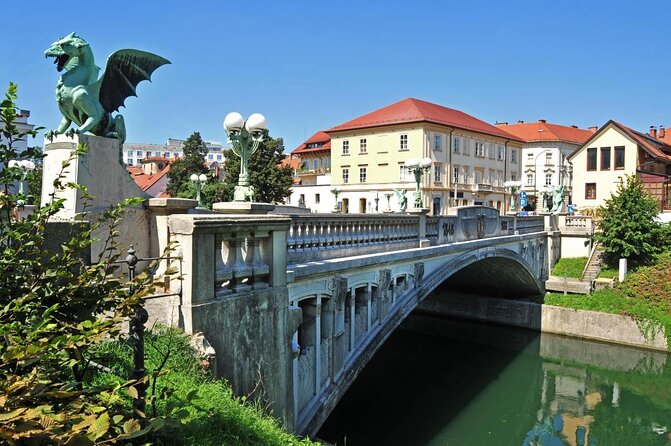
Next up is Dragon Bridge. It’s one of those landmarks you’ve probably seen online, but being there changes it. The bridge sits in the heart of Da Nang at the Le Dinh Duong/Bach Dang traffic circle, so you get a sense of how it anchors the city visually. Since the admission here is free, it’s an easy win: a short stop with big “I’m in Da Nang” energy.
A small, practical bonus is the included stop at a traditional coffee shop. You’ll get a chance to try local coffee before the day gets heavier. If you’re sensitive to caffeine, pace yourself; coffee breaks can turn into full-on snack breaks if you’re not careful.
Marble Mountains: caves, tunnels, and temple spots without the stress
After the city sights, the plan moves to the Marble Mountains, a cluster of limestone and marble hills with caves, tunnels, and small temples scattered through the formations. This is one of the stops that turns a history lesson into something physical. Walking through cave-like areas feels different from reading about it, and the route naturally builds in a sense of exploration.
What I like about this stop on a day tour: it’s structured. You’re not wandering and guessing how long things take. You can enjoy the sights and then move on rather than getting stuck in the wrong place for too long.
What to consider: the caves and temple steps can be uneven. Wear shoes you trust on stone and plan for some stair climbing.
Son Tra (Monkey) Mountain: mountain air, views, and the Lady Buddha payoff

Then the day shifts to nature and religion with Son Tra (Monkey) Mountain. It’s a national park area and it sits high enough to change the atmosphere—cooler air, wider perspectives, and a break from city bustle. The drive time is short enough to stay part of a smooth itinerary, not a full half-day detour.
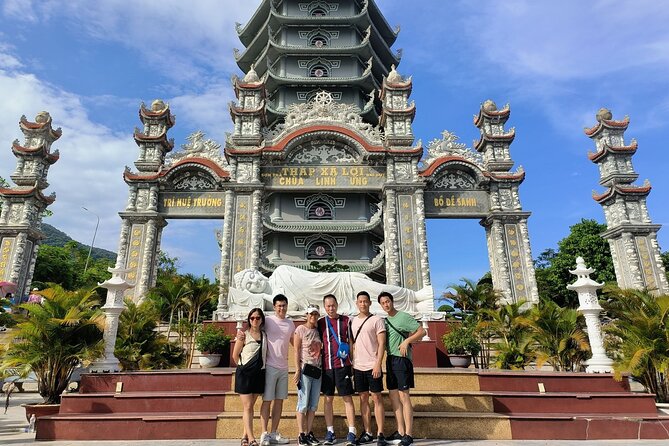
From there, you head to the Lady Buddha Pagoda (Linh Ung Pagoda) on the Son Tra Peninsula. This is the spiritual centerpiece. The big draw is the tall Buddha statue, and the views around it make the visit feel more than just a photo stop. Expect a slow-down moment where you stand back, look out, and let the setting do some of the work.
Admission is included for this stop, so you don’t waste time at ticket windows. One more practical note: this is a great place for shade breaks, since the surrounding areas can shift quickly between sun and cooler spots depending on where you stand.
More Da Nang tours we have been out and rated




The transfer to Hoi An feels long, but the reward is worth it
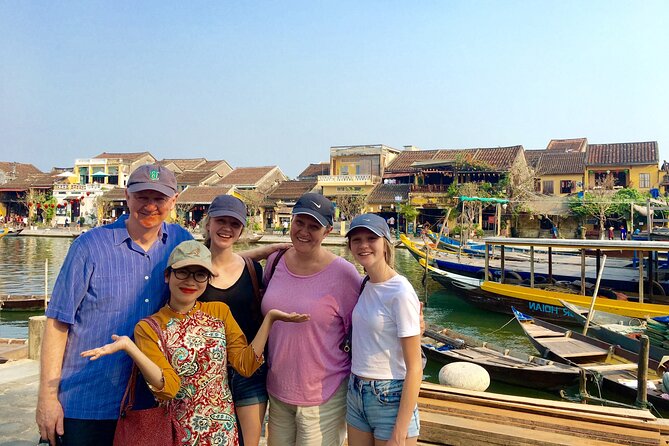
Once you travel from Da Nang to Hoi An Ancient Town, the change in atmosphere is immediate. Hoi An feels like it’s built for walking. The streets are made for “look up, look down, read the details” behavior—especially with the mix of Chinese and Japanese influences.
You get about two hours in Hoi An Ancient Town with entrance included. That time is useful because it’s long enough to see the main landmarks without turning the visit into a rushed tick-box exercise. You also get a guide to give context. When the story clicks, the buildings start to make sense.
Hoi An’s landmarks: Fukian Hall, Japanese bridge, and old Tan Ky house
The tour doesn’t treat Hoi An like a single mural wall. It gives you multiple entry points into the city’s past.
First is the Fukian (Phuc Kien) Assembly Hall, built around 1690 for the Fujian Chinese community. Assembly halls are a big part of Hoi An’s story because they show how merchant communities organized themselves socially and economically. Even if you don’t read every sign, the structure and purpose are easy to grasp once the guide explains why it exists.
Next comes the Japanese Covered Bridge (Chùa Cầu), completed in 1593. This bridge is iconic for a reason: it’s a rare mix of function and symbolism, and it looks different from every angle. You don’t just see a bridge—you see why it became an emblem.
Finally, you visit an old house of Tan Ky. Old merchant houses in Hoi An work like time machines. Even on a short visit, you can spot how the space was designed for daily living and trade-era conditions. This stop tends to be the one that makes people slow down the most, because it feels more personal than monuments.
Admission is included across these sites, which is a quiet but real value. When you don’t have to manage tickets, you keep your momentum and your photos.
Night market time: what you should expect to eat and shop for

After the heritage stops, you move into a night market walk. This is where Hoi An goes from historical to sensory. The market is known for food and local products, and one standout is the lantern scene—a signature Hoi An product and a major part of its evening vibe.
The tour includes local food and drinks, so you’re not relying on your own hunt for snacks. I like night-market time on a guided day because the guide can point you toward what’s worth trying and keep you from wasting hunger on average stuff.
Also, the best guides on this tour pay attention to pacing. In past groups, guides like Dat and Thinh were praised for being patient and flexible, including giving people time to enjoy each stop rather than sprinting through everything. If your guide is like that, you’ll get a more relaxed evening pace too.
Coffee culture in Hoi An: the egg-yolk sweet spot
One of the most memorable and very local stops is sweet Vietnamese coffee made with egg yolks and condensed milk. This isn’t just a drink; it’s a food-culture detail that signals how Vietnamese coffee evolved and adapted. If you like desserts, this will feel like an easy win. If you normally skip sweet drinks, you might still want a small taste just for the experience.
I also like that the tour doesn’t pretend coffee is the only reason to visit. It’s one piece of the day’s food story, connected to the timing of the route so you’re not drinking caffeine at the wrong time.
Guides and drivers: the difference between a tour and a good day
A big reason this tour scores so high is the human factor. You might be guided by people like Dat, Thinh, Mee, Kelly, Anh, Tracee, Lam, or Long, and the day can feel different depending on the style of your guide. The common thread in the feedback is that guides were described as engaged, patient, and able to tailor the pace.
Drivers also matter. The tour relies on a capable driver for timing between Da Nang landmarks and the Hoi An transfer. In one standout case, the combination of guide Dat and driver Mr. T was specifically praised for making the day feel smooth and easy.
If you care about photos, pay attention to how your guide handles photo moments. One guide was even noted for being an excellent photographer—useful if you want pictures that look natural instead of awkward tourist snapshots.
Price and value: why $72 can make sense for this route
At about $72 for a 5 to 6 hour day, this tour can feel like a bargain if you factor in what you’d otherwise pay for yourself. You’re getting:
- Entrance fees included for multiple stops
- A modern vehicle with a professional driver
- Bottled water
- Local food and drinks
- An English-speaking guide
- A small-group experience (max 10)
Do the math: in Vietnam, day tours add up when you pay transport, tickets, and guide time separately. Here, those pieces are bundled. The value is strongest if you want convenience and a guided story, not just a seat on a bus.
One caution: if you’re the type who hates schedules and prefers total freedom, you may feel constrained by the fixed route. For everyone else, the structure is what makes the price reasonable.
What to pack and how to handle the pace
Even though it’s a “one day overview,” the day includes beach time, temple visits, and heritage walking. I’d plan like this:
- Wear comfortable shoes for stone steps and uneven areas.
- Bring sunscreen and a hat, especially for beach and outdoor mountain views.
- Carry water if you tend to drink a lot—bottled water is included, but you’ll know your habits.
For the night market part, keep expectations realistic. Food and lantern shopping are part of the vibe, but you’re still within a tour timeline, so don’t plan to turn it into an all-night hunt.
Who this tour fits best (and who should consider a different plan)
This tour is a great match if you want:
- A high-quality overview of Da Nang and Hoi An without complicated planning
- Included tickets and food so you can spend energy on sights
- A guide who can explain why the places matter
It may be less ideal if you:
- Want a slow “hang out” day with minimal walking
- Hate guided pacing and prefer to wander on your own for hours
If you’re doing Vietnam as a fast-moving trip and you want both cities to feel connected, this is a strong use of time.
Should you book Da Nang & Hoi An: Food, Sightseeing, Culture & Hidden Gems?
If you’re deciding based on value and efficiency, I’d book it. The combination of small-group attention, included entrances, and a route that hits beach landmarks, marble hills, Son Tra, and UNESCO Old Town covers a lot without making the day feel chaotic.
I’d skip it only if your travel style is all about total freedom and very slow pacing. Otherwise, this is exactly the kind of day tour that helps you understand the region fast—then gives you ideas for what to return to later on your own.
FAQ
How long is the Da Nang and Hoi An tour?
The tour lasts about 5 to 6 hours.
Where does the tour start and where does it end?
It starts at Cups Coffee Roastery at 192 Nguyễn Văn Thoại, Bắc Mỹ Phú, Ngũ Hành Sơn, Ngũ Hành Sơn, Đà Nẵng, and it ends back at the meeting point in Da Nang.
What major sights are included?
You’ll visit My Khe Beach, Dragon Bridge, Son Tra (Monkey) Mountain, Lady Buddha Pagoda, and Hoi An Ancient Town, plus stops in Hoi An such as the Fukian Assembly Hall, Japanese Covered Bridge, and an old house of Tan Ky.
Are entrance fees included?
Yes. Entrance fees are included for the stops listed as having admission tickets.
Is food included?
Yes. Local food and drinks are included, along with bottled water.
How big is the group?
The tour has a maximum of 10 travelers.
Can I cancel for a full refund?
Yes. You can cancel up to 24 hours in advance for a full refund.
More Food & Drink in Da Nang
- Da Nang Cooking Class with Coffee Tasting and Market Visit
★ 5.0 · 310 reviews - DaNang Night Foodie Tour-Sighseeing with Aodai Lady Rider Private
★ 5.0 · 255 reviews - Da Nang Local Food Tour
★ 5.0 · 247 reviews - Da Nang Evening Food Tour
★ 5.0 · 231 reviews - DaNang Farm-to-Table Cooking Class with Market and Coffee Tasting
★ 5.0 · 131 reviews - Da Nang Food Tour Motorbike & Sightseeing By Ao Dai Lady Rider
★ 5.0 · 121 reviews
More Tour Reviews in Da Nang
- Da Nang: Lady Buddha, Marble Mountains, and Am Phu Cave Tour
★ 4.7 · 3,373 reviews - Full Day Golden Bridge and Ba Na Hills Small Group Tour
★ 5.0 · 2,369 reviews - From Da Nang/Hoi An: Golden Bridge Ba Na Hills Full-Day Tour
★ 4.7 · 1,737 reviews - Da Nang: Han River Local Cruise by Night
★ 4.1 · 1,152 reviews - Da Nang: Golden Bridge, Lady Buddha, Marble Mt & Am Phu Cave
★ 5.0 · 1,147 reviews - Morning Small group to Marble Mountains – Am Phu Cave – Monkey Mountain
★ 5.0 · 1,097 reviews
Down to Hoi An Old Town
- From Da Nang/Hoi An: Golden Bridge Ba Na Hills Full-Day Tour
★ 4.7 · 1,737 reviews - Marble Mountains – Hoi An Ancient Town Sunset Daily Ingroup Tour
★ 5.0 · 690 reviews - From Da Nang or Hoi An: Ba Na Hills Golden Bridge Tour
★ 4.7 · 618 reviews - Hoi An/Da Nang: Snorkelling & Island-Hopping Speedboat Tour
★ 4.6 · 397 reviews - Da Nang International Airport PRIVATE Transfer To Da Nang/Hoi An
★ 5.0 · 392 reviews - Lady Buddha, Marble Mountains, Coconut Jungle & Hoian City Tour
★ 5.0 · 370 reviews
Just Added: The Newest Da Nang Reviews




Hoi An Old Town Day Trips, side by side.
 ★ 4.7From Da Nang/Hoi An: Golden Bridge Ba Na Hills Full-Day TourFrom $671,737 reviews
 ★ 5.0Marble Mountains – Hoi An Ancient Town Sunset Daily Ingroup TourFrom $33690 reviews
 ★ 4.7From Da Nang or Hoi An: Ba Na Hills Golden Bridge TourFrom $63618 reviews
 ★ 4.6Hoi An/Da Nang: Snorkelling & Island-Hopping Speedboat TourFrom $63397 reviews
Da Nang International Airport PRIVATE Transfer To Da Nang/Hoi AnFrom $5392 reviews
★ 4.6Hoi An/Da Nang: Snorkelling & Island-Hopping Speedboat TourFrom $63397 reviews
Da Nang International Airport PRIVATE Transfer To Da Nang/Hoi AnFrom $5392 reviews
 ★ 5.0Lady Buddha, Marble Mountains, Coconut Jungle & Hoian City TourFrom $69370 reviews
 ★ 4.9My Son Sanctuary Tour by Van & Boat from Hoi An/Da NangFrom $19367 reviews
 ★ 4.7Hoi An: Marble Mountains, Lady Buddha and Am Phu Cave TourFrom $25322 reviews
Lists featuring this tour