

REVIEW · HISTORICAL TOURS
Da Nang War Tour History: Spanish-French Attack to American Base
War changes how you see Da Nang. This one-day route links the French-Spanish era to the American period, with big scenery stops like Marble Mountains and Hai Van Pass that turn history into something you can actually picture. I like how the story moves in time, not just place-to-place guessing.
I also like that the day balances heavy topics with a breather: Lady Buddha on Son Tra is 67 meters tall, and the Cham Museum gives you a calmer cultural anchor after the war sites. One thing to keep in mind: it’s a long stretch (about 9 to 10 hours), and some stops involve walking on uneven ground and stairs.
In This Review
- Key things to know before you go
- A long day that turns war geography into a story
- Marble Mountains: caves, temples, and marble craft vibes
- Hai Van Pass Tower and the 1858 defense story
- Son Tra Peninsula: American Radar and the Landing Zone
- Spanish Cemetery: the 400 French and Spanish losses
- Lady Buddha at Bai But Pagoda: 67 meters of viewpoint relief
- Da Nang Museum of Cham Sculpture: 250 Hindu statues from the Champa era
- What’s included, and what you’ll want to plan for
- Price and value: $29 for a full, guided war-and-culture route
- How to time it so the 9–10 hours don’t wear you out
- Who this Da Nang War History tour is best for
- Should you book this Da Nang War History tour?
- FAQ
- How long is the Da Nang War History tour?
- How much does the tour cost?
- Is pickup offered, and is it private?
- What major stops does the tour include?
- Are entrance tickets included?
- Are meals included in the price?
- What is the cancellation policy?
Key things to know before you go
- A timeline through multiple wars: French-Spanish attacks in the 1858 period, then American Vietnam War-era sites on Son Tra.
- Son Tra Peninsula focus: American Radar (Magic Eyes of Indochina) and the Landing Zone story sit right where people look for the past.
- Spanish Cemetery with 400 names/losses: a clear, sobering waypoint tied to Indochina casualties.
- 67-meter Lady Buddha reset: you get a dramatic viewpoint moment after the military parts.
- Cham culture in the middle of it: the Da Nang Museum of Cham Sculpture holds 250 Hinduism statues from the Champa kingdom era.
More of the region history, up close
- Hue Culture & History Day Tour – Departing Hoi An or Da Nang★ 5.0 · 26 reviews
- My Son Sanctuary And Hoi An Heritage Full-day Tour★ 4.5 · 25 reviews
- Da Nang: Full-day My Son Sanctuary And Hoi An Heritage Tour★ 4.8 · 21 reviews
- Da Nang Epic History Tour by Cham Museum & Tasty Cuisine/Cafe★ 5.0 · 15 reviews
A long day that turns war geography into a story
If you’re in Da Nang and you only have one day, this tour does something smart: it threads major war-linked locations into a route you can understand fast. You start with a place that feels spiritual and human-scale, then you work your way up to the coastal defensive lines and radar-era lookout points. By the time you reach the Son Tra Peninsula, the “why this matters” part starts clicking.
The practical value is simple: you get a guided route (private car, pickup offered) that covers a lot of ground in one go. The schedule is built around several time blocks that add up to roughly 9 to 10 hours, so you’re not stuck making your own connections between sites that are far apart.
The tone is educational but not dry. The tour’s themes are set up as: Champa-era context, the French and Spanish assault period (1858), then the American Vietnam War presence, all mapped onto modern Da Nang neighborhoods and viewpoints.
Marble Mountains: caves, temples, and marble craft vibes
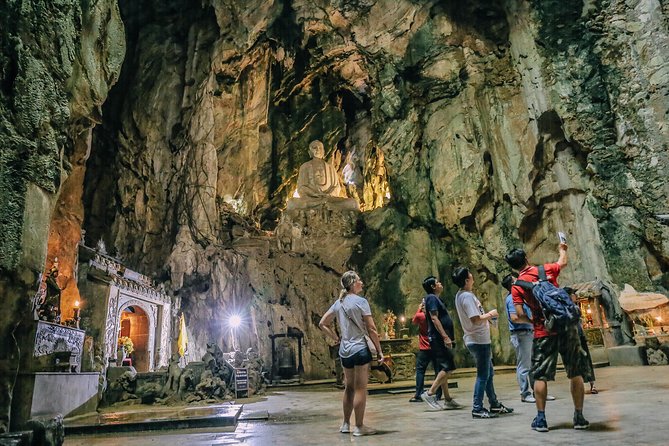
Marble Mountains is a top Da Nang stop for good reason. You get caves and temples packed into a real physical landmark—so the history you learn later has a “human scale” starting point. It’s also tied to the area’s marble traditions, and the tour notes include sculpturing activities, which is the kind of detail you’d miss if you were just taking selfies and moving on.
What I like for your planning: this stop is set at about 2 hours, which is enough time to walk around, see a few cave-temple areas, and still feel like you’re not rushing. The terrain can be uneven and steps can add up, so wear shoes with grip and keep water in mind even though bottled water is included.
The main drawback is physical, not intellectual. If you’re not a fan of climbing, you may need to choose what you walk into and what you view from outside rather than trying to do everything.
Hai Van Pass Tower and the 1858 defense story
Hai Van Pass is one of those places where the geography explains strategy. The tour takes you to the Hai Van Tower, framed around why the An Nam kingdom built it as a warning/defense measure during the 1858 French attack context tied to the Hue Imperial area.
The nice part here is that you don’t just hear dates. You get shown how people used elevation and line-of-sight logic to watch for movement, then you learn where to access the peak views. Even if you’re not obsessed with military history, this stop helps you read the coast like a map.
Timing-wise, you’ll spend about 2 hours at this stop cluster, including the tower time. That matters because Hai Van areas can feel slow if you’re doing it solo—guides keep you from wasting time figuring out what’s worth seeing first.
If the day is hot or visibility is limited, the view payoff can drop. The good news: the tour’s structure still keeps you moving, so the day doesn’t stall even when you can’t see everything.
Son Tra Peninsula: American Radar and the Landing Zone

This is the heart of the “war tour” feeling. On Son Tra Peninsula, you visit the American Radar (Magic Eyes of Indochina) and the Landing Zone (LZ) story that connects to helicopter operations during the Vietnam War period. The tour’s phrasing points out the practical military use: these sites weren’t abstract; they were part of a working system.
What you’ll likely enjoy here is how the guide connects place to purpose. Radar sites make more sense when you stand where the strategy would have mattered—coastal lines, the angle of the terrain, and why helicopters would need a landing zone in the right area.
This stop runs about 3 hours, and it’s also marked with admission ticket free in the schedule information. That’s a real value point: you pay the tour price for the day, and you’re not hit with extra site costs at this particular waypoint.
A consideration: Son Tra is a peninsula vibe, so you’ll be walking and standing in outdoor conditions. In warm weather, shade and water habits matter. Mineral water is included, but it’s still smart to pace yourself.




Spanish Cemetery: the 400 French and Spanish losses

Right alongside the American-era story, the tour places you at the Spanish Cemetery, linked to the loss of 400 Spanish and French in Indochina. This is where the emotional weight of the day shows up.
I like that the tour doesn’t skip over the smaller, specific detail of numbers. When you attach a concrete count to a place, it makes the broader “colonial conflict” idea more real—and it’s easier to remember than generic timelines.
The drawback is also emotional. If you’re sensitive to war memorial topics, expect this moment to feel heavier than a typical sightseeing stop.
Lady Buddha at Bai But Pagoda: 67 meters of viewpoint relief

After the military stops, you go to Lady Buddha at the Bai But Pagoda complex. The highlight is the 67-meter-tall statue, and it works as a mental reset. You’re trading radar-and-landing-zone talk for a wide-open sense of scale and a place to breathe.
The tour allots about 1 hour here, and that’s about right. You can enjoy the views, take photos, and wander around the complex without the day stretching too long.
If you’re traveling with mixed interests—someone who wants history and someone who wants scenery—this is the stop that helps everyone agree. It’s dramatic without being complicated.
The main practical point: bring layers if the air is cooler on the peninsula or if morning fog fades later. Conditions can change faster than you expect when you’re moving between elevated areas and coastal zones.
Da Nang Museum of Cham Sculpture: 250 Hindu statues from the Champa era

This is your cultural anchor, and it’s a good one. At the Da Nang Museum of Cham Sculpture, you’re looking at Hinduism sculpture from the Champa kingdom, with about 250 statues represented in the museum’s collection spanning roughly from the 2nd to the 17th century era.
The big value for you is that it shifts the story back toward local identity rather than focusing only on foreign military arrivals. You learn the broader background of who lived here, what they built, and what religious art looked like over time.
It’s scheduled for about 1 hour, which keeps it from turning into a “museum slog.” You can see a lot without needing hours of museum stamina. If you like art history but hate long lines and slow pacing, this time block fits well.
What’s included, and what you’ll want to plan for

On paper, the tour looks straightforward: you get a private-car day, a guide, and key entrance tickets. In practice, it’s best to think in terms of ticket-dependent stops.
Included items (based on the option you choose) can cover:
- entrance tickets for Cham Museum
- military museum entrance tickets (depending on option)
- Marble Mountains
- Hai Van Pass Tower
- American Landing Zone (depending on option)
- Lady Buddha
- English-speaking guide service (listed as a private certificate)
- round-trip transfer by modern private car (depending on option)
- mineral water
What’s not included:
- meals
- travel insurance
- tips/personal expenses
So here’s your practical move: plan for snacks and a simple meal strategy. Even if you’re not hungry, war-history stops plus driving can drain your energy. Having a plan for lunch or late-afternoon food makes the day feel smoother instead of “hold out until you find something.”
Also, check your timing for sun and heat. Outdoor time shows up on Marble Mountains, Hai Van Pass areas, and Son Tra Peninsula.
Price and value: $29 for a full, guided war-and-culture route
At $29 per person, this tour is priced like a “do it now” deal rather than a luxury day. The value comes from how the day is assembled: multiple sites that would take you much longer to line up on your own, plus a guide who helps you connect the dots.
This isn’t just admission value. You’re paying for:
- a structured route across long distances
- a private group format (your group only)
- guided explanation that turns scattered locations into a single timeline
- entrance tickets that are included at several key stops
- bottled water
You also have some comfort features listed: pickup offered, group discounts, and mobile ticket. Those details matter when you’re arriving in Da Nang without wanting to spend extra time at offices or ticket counters.
One note: the tour requires good weather. If visibility or conditions are poor, you may be offered a different date or a full refund. So it helps to book with at least some flexibility in your schedule.
How to time it so the 9–10 hours don’t wear you out
A day that runs close to 10 hours can feel long, even when it’s fun. The key is to treat it like a hike day plus sightseeing.
My advice:
- Wear grippy shoes for Marble Mountains and any stair-heavy sections.
- Bring a hat/sunglasses for Hai Van Pass and Son Tra outdoor areas.
- Pace your photo stops. If you try to photograph everything the same way, you’ll lose time and end up rushing later.
- If you have any mobility limits, mention it upfront so the guide can help you choose what to prioritize.
Also, remember the tour is designed as a sequence of time blocks:
- Marble Mountains (~2 hours)
- Hai Van Pass Tower area (~2 hours)
- Son Tra Peninsula military sites (~3 hours)
- Lady Buddha (~1 hour)
- Cham Sculpture Museum (~1 hour)
That structure helps you mentally prepare. You’re not guessing how long you’ll stand in each place.
Who this Da Nang War History tour is best for
This tour fits best if you want more than a quick checklist. You like context, you want to know why people built towers, cemeteries, and radar systems where they did, and you also appreciate the counterbalance of Champa art culture.
It’s also a strong choice for groups who want a private, guided day without the stress of booking separate drivers and tickets.
You might think twice if:
- you strongly prefer slow, standalone sightseeing over a full-route day
- war memorial topics feel too heavy for your comfort level
- you don’t do well with walking, stairs, or outdoor heat
Should you book this Da Nang War History tour?
Yes—if you want a one-day route that connects French-Spanish 1858 context, then American Vietnam War-era sites on Son Tra, and still gives you cultural depth at the Cham Sculpture Museum.
Book it especially if you value:
- a guided timeline that turns geography into meaning
- included tickets at major stops
- the chance to see the dramatic Son Tra viewpoint moment at Lady Buddha
Skip it only if you want a light, purely beach-and-café style day. This one is a day of place-based history with a few scenic breaks, not a lounging itinerary.
If you do book, do one simple thing: come prepared for a long day by planning food and wearing proper shoes. That’s what lets you enjoy both the emotional memorial stops and the calmer cultural ones without feeling worn out.
FAQ
How long is the Da Nang War History tour?
It runs about 9 to 10 hours.
How much does the tour cost?
The price is listed at $29.00 per person.
Is pickup offered, and is it private?
Pickup is offered, and the format is private—only your group participates.
What major stops does the tour include?
The schedule includes Marble Mountains, Hai Van Pass (Hai Van Tower), Son Tra Peninsula sites such as American Radar (Magic Eyes of Indochina) and the Landing Zone area, Lady Buddha at Bai But Pagoda, and the Da Nang Museum of Cham Sculpture.
Are entrance tickets included?
Many entrance tickets are included depending on the option you choose, including tickets for Cham Museum, Marble Mountains, Hai Van Pass Tower, Lady Buddha, and also some military sites or the American Landing Zone depending on your selection.
Are meals included in the price?
No. Meals are not included, so you should plan your own lunch/snacks during the day.
What is the cancellation policy?
Free cancellation is allowed up to 24 hours in advance for a full refund. If canceled due to poor weather, you’ll be offered a different date or a full refund, and the experience may also be canceled if a minimum traveler number isn’t met.
History Around Da Nang
- Hue Culture & History Day Tour – Departing Hoi An or Da Nang
★ 5.0 · 26 reviews - My Son Sanctuary And Hoi An Heritage Full-day Tour
★ 4.5 · 25 reviews - Da Nang: Full-day My Son Sanctuary And Hoi An Heritage Tour
★ 4.8 · 21 reviews - Da Nang Epic History Tour by Cham Museum & Tasty Cuisine/Cafe
★ 5.0 · 15 reviews - 5-Day Private Tour of Top Heritage Sites: Hue, Hoi An & More
★ 5.0 · 10 reviews - Charming Da Nang Show: Culture, History, Art Vietnamese Show
★ 4.8 · 9 reviews
More Tour Reviews in Da Nang
- Da Nang: Lady Buddha, Marble Mountains, and Am Phu Cave Tour
★ 4.7 · 3,373 reviews - Full Day Golden Bridge and Ba Na Hills Small Group Tour
★ 5.0 · 2,369 reviews - From Da Nang/Hoi An: Golden Bridge Ba Na Hills Full-Day Tour
★ 4.7 · 1,737 reviews - Da Nang: Han River Local Cruise by Night
★ 4.1 · 1,152 reviews - Da Nang: Golden Bridge, Lady Buddha, Marble Mt & Am Phu Cave
★ 5.0 · 1,147 reviews - Morning Small group to Marble Mountains – Am Phu Cave – Monkey Mountain
★ 5.0 · 1,097 reviews
Just Added: The Newest Da Nang Reviews





Historical Tours, side by side.
 ★ 5.0Hue Culture & History Day Tour – Departing Hoi An or Da NangFrom $14826 reviews
 ★ 4.5My Son Sanctuary And Hoi An Heritage Full-day TourFrom $9525 reviews
 ★ 4.8Full-day My Son Sanctuary And Hoi An Heritage TourFrom $6721 reviews
 ★ 5.0Da Nang Epic History Tour by Cham Museum & Tasty Cuisine/CafeFrom $2915 reviews
 ★ 5.05-Day Private Tour of Top Heritage Sites: Hue, Hoi An & MoreFrom $62610 reviews
 ★ 4.5Charming Da Nang Show : Culture-Art-History-LifeStyle of VietnamFrom $269 reviews
 ★ 4.8Charming Da Nang Show: Culture, History, Art Vietnamese ShowFrom $229 reviews
 ★ 3.5Half-day Hoi An Heritage WalkFrom $429 reviews
Lists featuring this tour