REVIEW · DA NANG
Danang On the Waterfront Photo Tour
Da Nang wakes up fast, and so will your camera. This early-morning documentary photo tour gives you a real look at fishermen, markets, harbour work, and even the Da Nang skyline—plus hands-on coaching as the light changes. What I love most is the photo review time with your guide and the chance to practice fast-moving waterfront scenes instead of just taking pretty pictures. One drawback: you’re committing to a super-early 5:30am start, and the tour depends on good weather.
The format is simple: you shoot, you get direction, you shoot again, then you review what you made. It’s private to your group, so you’re not stuck watching someone else’s camera settings while you wait your turn.
If you want a tour that turns into better photos (not just more photos), this is a strong option.
In This Review
- Key points before you go
- 5:30am in Da Nang: why the early light is the whole point
- What you should consider
- The money question: is $122.06 worth it?
- Stop 1: Danang City Beach—coracle boats, market sorting, and real movement
- The skill focus you’ll likely use immediately
- Stop 2: Danang Harbour—waking streets, coffee break, and shot feedback
- Watch for one common mistake
- Stop 3: The Doc’s—ice loading, work rhythms, and story composition
- Why this stop can level up your photography fast
- Photo review time: the coaching that changes your results
- What to bring (and how to not sabotage your own photos)
- Who this tour suits best in Da Nang
- Logistics you’ll feel (quickly): private group, pickup, and timing
- Should you book this Da Nang waterfront photo tour?
- FAQ
- FAQ
- What time does the Da Nang on the Waterfront photo tour start?
- How long is the tour?
- Is hotel pickup included?
- Do I need to pay for admission tickets?
- Is food or drinks included?
- What happens if the weather is poor?
Key points before you go
- 5:30am start: you’re there before the day gets loud, so your images feel more honest
- Docks to harbour to skyline: you’re working different scenes, not just one photo spot
- Guide feedback on the spot: you correct mistakes while the light is still good
- Practice documentary basics: working people, movement, and storytelling through composition
- Photo review after shooting: you learn faster because you compare shots right away
- Hotel pickup/drop-off included: fewer logistics so you can focus on photography
More Da Nang tours we have been out and rated
- 3 Hour Golden Bridge Photoshoot in Ba Na Hills★ 5.0 · 21 reviews
- MY SON SUNRISE TOUR to avoid Crowds, Take Nice Photos from HOI AN or DANANG CITY★ 5.0 · 13 reviews
- MY SON Early Morning Tour to avoid crowd,Take Nice Photos &Back by Private Boat★ 5.0 · 3 reviews
5:30am in Da Nang: why the early light is the whole point
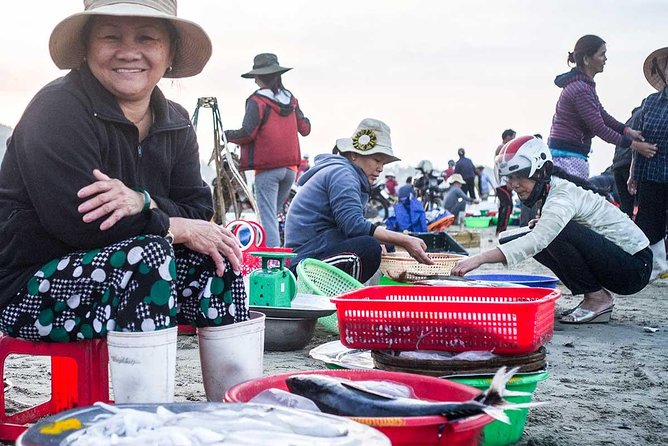
If you’ve ever taken photos at midday, you know the problem: everything looks flat and “the scene” beats your camera. This tour attacks that issue directly by starting at 5:30am, when shadows are longer and contrast is cleaner. You’ll photograph the waterfront while it’s still coming to life—fishermen bringing in overnight catch, workers shifting from quiet prep into real motion, and traders sorting goods.
Hotel pickup helps a lot. When the start time is that early, the difference between showing up tired and showing up ready is often transportation. Here, pickup and drop-off mean you can roll out of bed, grab your camera, and focus on shooting rather than finding the meeting point in the dark.
You also get a useful structure: you’re not wandering alone hoping for inspiration. You’ll be learning as you go, with short stops and feedback loops built in.
What you should consider
The tour needs good weather. That’s common for waterfront shoots, where wind, rain, and low visibility make both photos and movement harder. If conditions are poor, you’ll be offered a different date or a full refund. Also, plan for walking around working areas; the tour asks for moderate physical fitness.
The money question: is $122.06 worth it?
At $122.06 per person for about 4 hours, you’re paying for two things: access to the right waterfront moments and a professional photographer guide who can correct your technique in real time.
For me, the value comes from the feedback. Generic tours show you where to stand; this one teaches you how to see. The itinerary includes multiple chances to stop, review shots, and adjust. That’s how you go from “I took a lot of photos” to “I made photos I like.”
Also, the tour is private to your group, which usually matters when photography instruction is the goal. You’re not competing with strangers for the guide’s attention. If you’re traveling with friends or a partner, you may also like that group discounts are offered (the exact details aren’t listed here, but the option exists).
Food and drinks aren’t included, so factor in a quick plan for water and anything you need to stay comfortable until the tour ends.
Stop 1: Danang City Beach—coracle boats, market sorting, and real movement
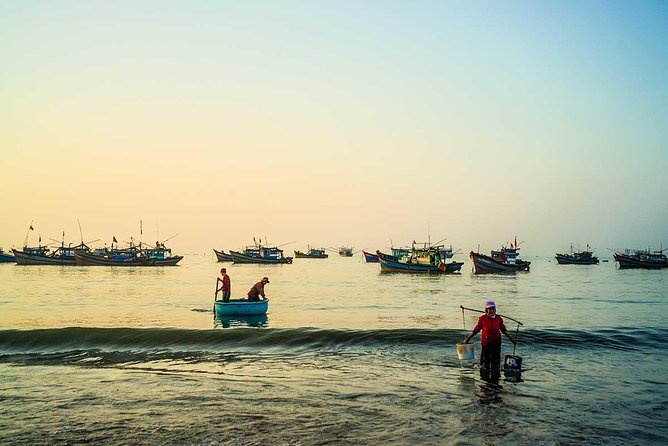
Your first stretch sets the tone. You’ll be at Danang city beach while fishermen bring in overnight catch from the East Sea. You’re watching coracle boats row across the tide, and you’ll see a lively market already running as traders sort and sell what’s landed.
This is where documentary photography becomes practical. It’s not just photographing boats. You’re training your eye on:
- movement (oars, rowing bodies, carts, hands sorting)
- decision points (what’s happening right now that tells the story?)
- contrast between stills and action (quiet light meets busy hands)
A big benefit here is the “early” context. The waterfront isn’t arranged for visitors; it’s doing its normal work. That’s the kind of setting where good composition matters, because you can’t control what the people do.

The skill focus you’ll likely use immediately
Even without a lot of technical jargon, this stop teaches the basics documentary shooters need: watch first, then frame; capture the moment, but keep an eye on backgrounds so your images don’t feel crowded.
Stop 2: Danang Harbour—waking streets, coffee break, and shot feedback
From beach to harbour, the tour shifts to a tighter, more layered scene. You’ll head through the waking streets toward the harbour and you’ll stop for a quick coffee along the way. That break isn’t just for caffeine—it’s also a moment to reset before the harbour action ramps up.
Then comes the part that many photo tours skip: you review what you’ve learned so far and get feedback on some of your shots. This makes the teaching “stick,” because you’re not saving everything for the end when you’ve already forgotten why a frame didn’t work.
Practically, this stage helps you adjust to harbour lighting and textures: metal surfaces, shaded workspaces, mixed brightness, and people moving between tasks. Harbour scenes often mix bright areas with darker pockets, which can trick your exposure. The guide’s feedback helps you correct that while you’re still there to reshoot.
Watch for one common mistake
If you’re used to taking travel snapshots, you might chase the obvious subject (the biggest boat, the closest person). In documentary work, the “story” often comes from smaller relationships in the frame—someone unloading, someone waiting, someone sorting ice or fish.
This stop is designed to get you thinking in relationships, not just subjects.
Stop 3: The Doc’s—ice loading, work rhythms, and story composition
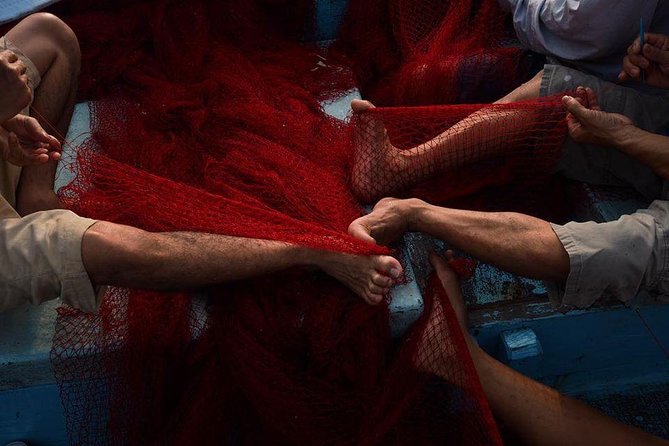
Now the tour turns more explicitly toward storytelling. At The Doc’s, workers are shuttling and loading ice for the boats. This is ideal documentary territory: purposeful movement, industrial details, and faces that show concentration instead of performance.
You’ll get a more detailed look at how to create a story around people’s work. The guide focuses on composition techniques for building relationships in your frame, so the viewer understands not just what they’re seeing, but how it connects—task to tool, person to job, action to environment.
Why this stop can level up your photography fast
Ice loading is visual. It has texture. It has repeated actions. It also gives you opportunities to experiment:
- close-to-mid framing (hands, tools, containers)
- wider frames that show workflow and spacing
- timing shots that catch the instant an action completes
Plus, because you’ve already practiced at the beach and harbour streets, you’ll be more ready to anticipate action here. That’s a big difference between a workshop and a photo walk.
Photo review time: the coaching that changes your results
A standout feature is that you take time to review your photos with your guide. That sounds simple, but it’s a major advantage if you’re serious about improving.
In a typical “tour,” you take photos, then you hope they turn out. Here, you’re offered feedback during the experience—after your earlier shooting—so you can correct what’s not working while the scenes are still available.
The reviews also point to how hands-on the teaching can be. One guest credited Thomas for lessons that worked even when it rained the whole time, including learning how to shoot in black and white and in low light. Another guest described an early-morning experience led by Cristian Sorega, who gave constant advice and helped raise their photography level.
Even if your own focus is something specific (portraits, motion, night/low light, or black-and-white conversion), the structure stays useful: shoot, review, adjust, repeat.
What to bring (and how to not sabotage your own photos)
Because this is an early, working-waterfront setting, you’ll want to plan for both light and comfort.
I’d bring:
- Your main camera (plus a second option if you have it)
- Extra memory and charged batteries (morning cold can reduce battery life)
- A small lens cloth (sea air and spray can happen near docks)
- Something for rain if the forecast looks uncertain
Since food and drinks aren’t included, bring water. If your hotel breakfast is too early to make it, a small snack can help you stay steady through the morning.
If you’re shooting black and white or low light, this tour’s lighting is a perfect rehearsal space. Early mornings naturally show how your camera handles contrast and shadow detail. If you’re not ready to switch modes yet, that’s fine—this is still a strong place to practice exposure choices, composition, and timing.
Who this tour suits best in Da Nang
This is a great fit if you:
- want documentary style rather than postcard photos
- enjoy hands-on instruction and want direct feedback
- don’t mind early mornings for better light and less tourist interference
- travel with a camera and want to use it more creatively
It’s less ideal if:
- you hate getting up early (the start is 5:30am)
- you want a relaxed sightseeing stroll with no instruction
- you can’t handle waterfront walking in uneven or active work areas
Because it’s private to your group, you can also choose this if you want a calmer experience with a consistent pace for your skill level.
Logistics you’ll feel (quickly): private group, pickup, and timing
You’re looking at about 4 hours total, starting at 5:30am. Pickup and drop-off are included, and you’ll receive confirmation at booking. The tour uses a mobile ticket, which is convenient if you like keeping everything on your phone.
The itinerary includes three main stops, with time for photo practice and feedback at each stage. You’ll also have a coffee break on the way to the harbour.
If you’re the type who likes to control every minute, this kind of guided structure is a relief. You get a plan, but you’re still making decisions through your camera settings and composition.
Weather dependency is the only real wildcard. When conditions are poor, the tour can be rescheduled or refunded, so check your calendar flexibility before booking.
Should you book this Da Nang waterfront photo tour?
I think you should book if you want more than a scenic walk. The big reason is the teaching loop: shooting + feedback + photo review across multiple waterfront settings. That’s what helps you improve during the tour rather than after you’re back home.
I’d also book if you’re interested in documentary photography fundamentals—capturing working life, motion, and relationships in the frame. Early-morning waterfront scenes are hard to replicate on your own because the work timing matters.
Skip it only if you’re not committed to the schedule. A 5:30am start is not “optional” energy. And if you’re strongly weather-sensitive, keep in mind the experience requires good conditions.
If you go, do one thing that makes the tour pay off: be willing to show your shots to the guide and accept correction. That’s where tours like this turn into real progress.
FAQ
FAQ
What time does the Da Nang on the Waterfront photo tour start?
The tour starts at 5:30am.
How long is the tour?
It’s about 4 hours (approx.).
Is hotel pickup included?
Yes. Hotel pickup and drop-off are included.
Do I need to pay for admission tickets?
Admission tickets are listed as free for each stop.
Is food or drinks included?
No. Food and drinks are not included, so you’ll want to plan for water or a snack if needed.
What happens if the weather is poor?
The tour requires good weather. If it’s canceled due to poor weather, you’ll be offered a different date or a full refund. You can also cancel up to 24 hours in advance for a full refund.
More Photography Sessions in Da Nang
- 3 Hour Golden Bridge Photoshoot in Ba Na Hills
★ 5.0 · 21 reviews - MY SON SUNRISE TOUR to avoid Crowds, Take Nice Photos from HOI AN or DANANG CITY
★ 5.0 · 13 reviews - MY SON Early Morning Tour to avoid crowd,Take Nice Photos &Back by Private Boat
★ 5.0 · 3 reviews
More Tour Reviews in Da Nang
- Da Nang: Lady Buddha, Marble Mountains, and Am Phu Cave Tour
★ 4.7 · 3,373 reviews - Full Day Golden Bridge and Ba Na Hills Small Group Tour
★ 5.0 · 2,369 reviews - From Da Nang/Hoi An: Golden Bridge Ba Na Hills Full-Day Tour
★ 4.7 · 1,737 reviews - Da Nang: Han River Local Cruise by Night
★ 4.1 · 1,152 reviews - Da Nang: Golden Bridge, Lady Buddha, Marble Mt & Am Phu Cave
★ 5.0 · 1,147 reviews - Morning Small group to Marble Mountains – Am Phu Cave – Monkey Mountain
★ 5.0 · 1,097 reviews